Industrial Adhesives & Sealants Manufacturer

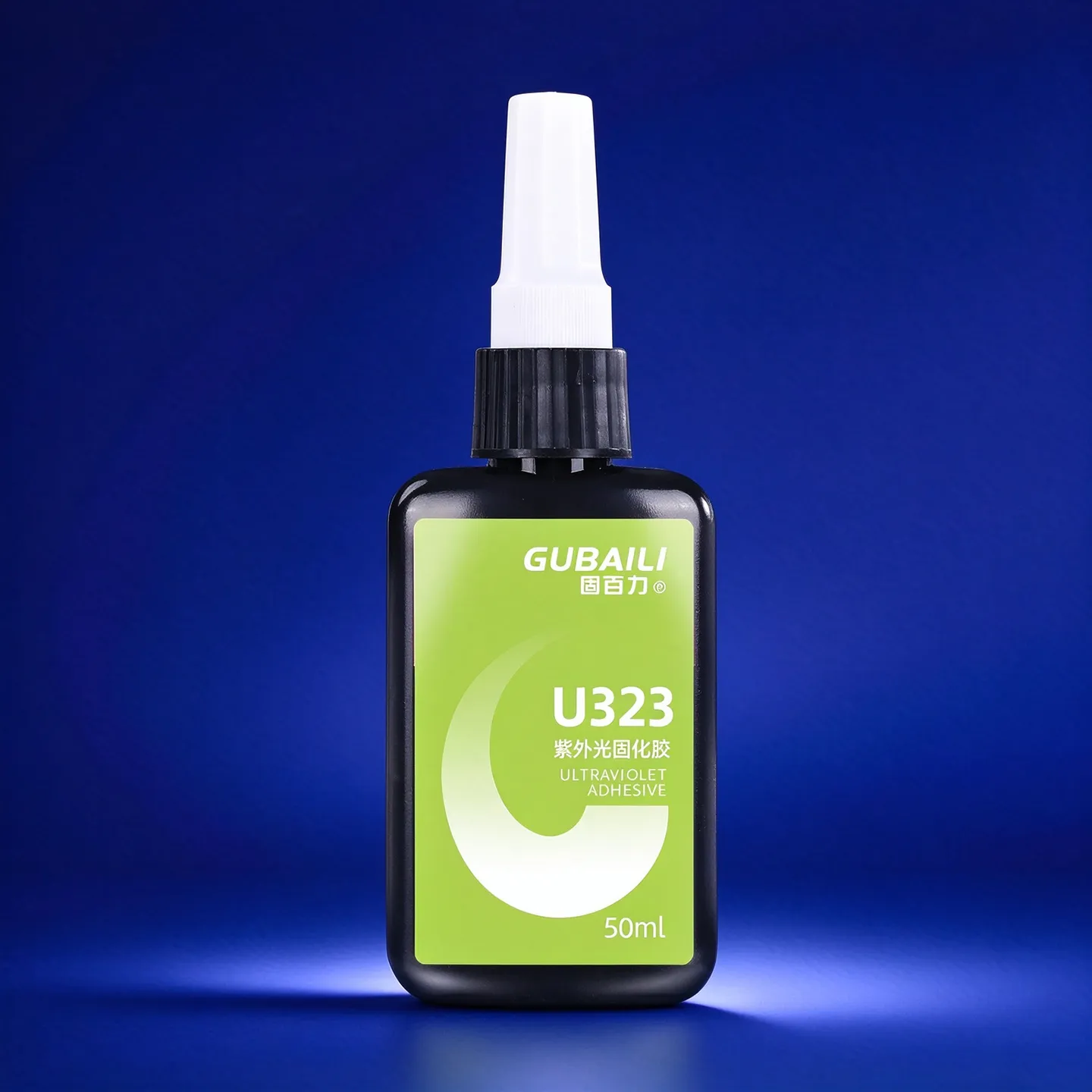
GUBAILI U323 UV adhesive for glass-to-metal bonding: clear, viscosity 800-1200 cP, cures in 10-20 seconds under UV light, shear strength >=16 N/mm². For glass with stainless steel, aluminum, watch cases and electronic scales. 50 ml pack.
High bond strength for structural joints under heavy loads.
Fast curing for higher production efficiency.
Clear after cure for appearance-critical applications.
Fast curing under UV light.
| Parameter | Specification / Value |
|---|---|
| Viscosity | 800 ~ 1200 cP |
| Color | Clear to pale yellow liquid |
| Cure Time | 10 ~ 20 seconds (UV exposure) |
| Shear Strength (Glass/Stainless Steel) | >= 16 N/mm² |
| UV Energy Required | 1000 mJ/cm² |
| Substrates | Glass, crystal, stainless steel, aluminum and other glass-to-metal combinations |
| Shelf Life | 12 months |
| Storage | Cool, dry, dark place |
| Packaging | 50 ml |
Product Overview
GUBAILI U323 is a UV-curing adhesive designed for bonding glass to dissimilar materials such as metal. The adhesive is a clear to pale yellow liquid and cures to a highly transparent, invisible bond line that preserves product appearance. Viscosity 800-1200 cP with moderate leveling, compatible with automated dispensing. It reaches initial set in 10-20 seconds under 365 nm UV light for high production efficiency. After curing, it adheres excellently to glass, stainless steel and aluminum, with glass-to-stainless-steel shear strength above 16 N/mm², good bond-line toughness, and stable humidity and weather resistance—ideal for strong bonding of dissimilar materials.
Industries
Widely used for glass-to-metal composite bonding, including glass-aluminum assemblies, watch cases, electronic scale panels, glass and crystal with metal bases, and other crafts and electronic accessories.
Instructions
1. Thoroughly clean the bonding surfaces, removing oil, dust and oxide, and keep them dry and clean;
2. Apply adhesive evenly, align and join the parts, press lightly to expel air bubbles, and control bond-line thickness;
3. Cure with a 365 nm UV source at an energy dose of at least 1000 mJ/cm²; extend exposure for thicker bond lines;
4. Proceed with handling or further assembly only after full cure; wipe squeeze-out with anhydrous alcohol.
Precautions
1. Store sealed in a cool, dry, dark place away from sunlight and strong UV sources;
2. Wear protective gloves and goggles to avoid contact with skin and eyes;
3. Opaque metal does not transmit UV light—cure through the glass side and ensure light reaches the bond line;
4. Keep the bond gap small; larger gaps significantly slow curing;
5. Shelf life 12 months; do not use expired product in production.
Substrates must be clean and dry, and the bond line should not be too thick, as this affects through-cure. Set lamp distance, power and time according to the process; moving the lamp slightly during exposure reduces shadowed areas.
For stress-sensitive plastics such as PC, be aware of stress-cracking risk from the adhesive; confirm with a small trial first.
A pure UV system requires UV exposure to cure; shadowed areas and opaque laminates cannot cure fully.
For such structures, use a dual-cure system, irradiate from a transparent side, or use a primer for local treatment.
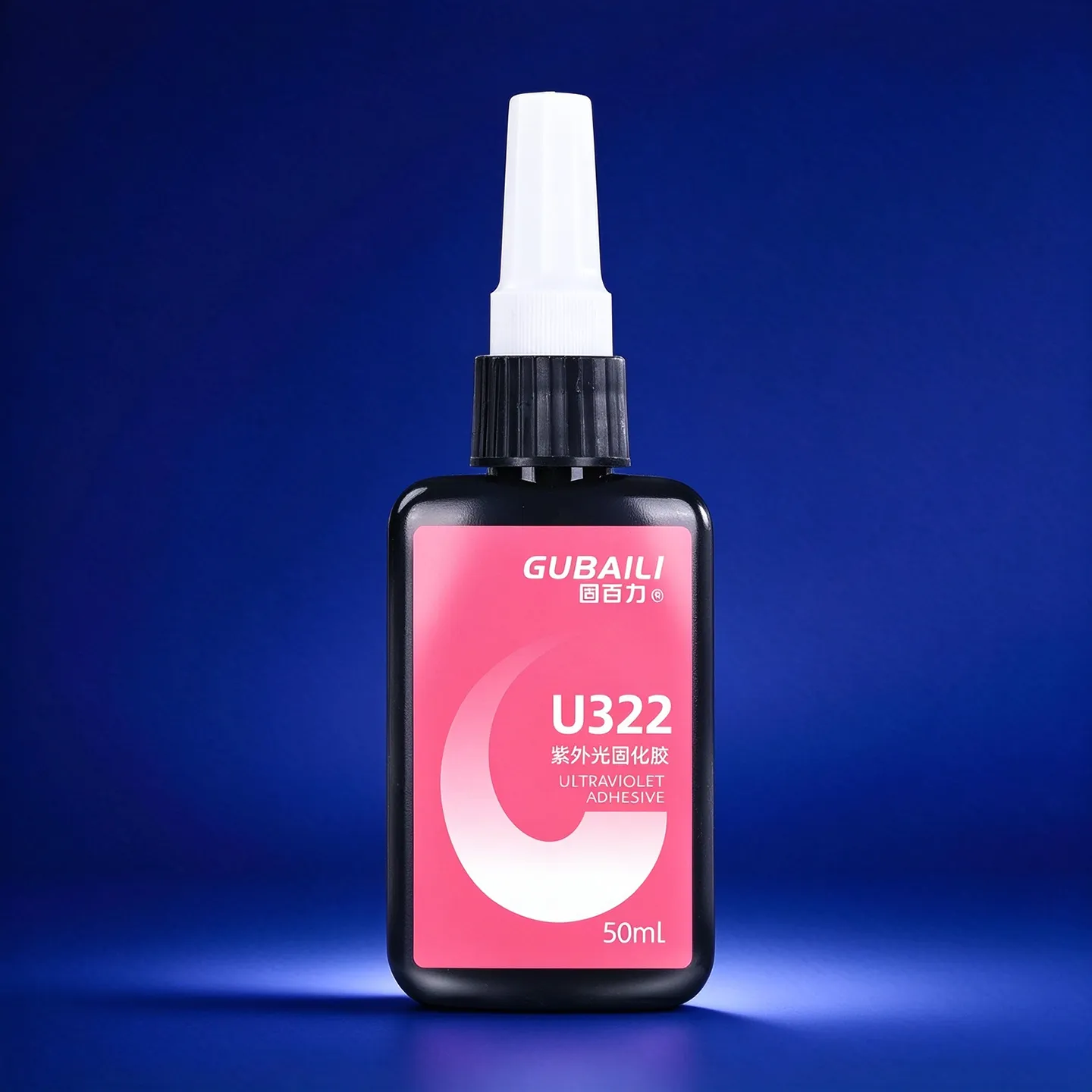
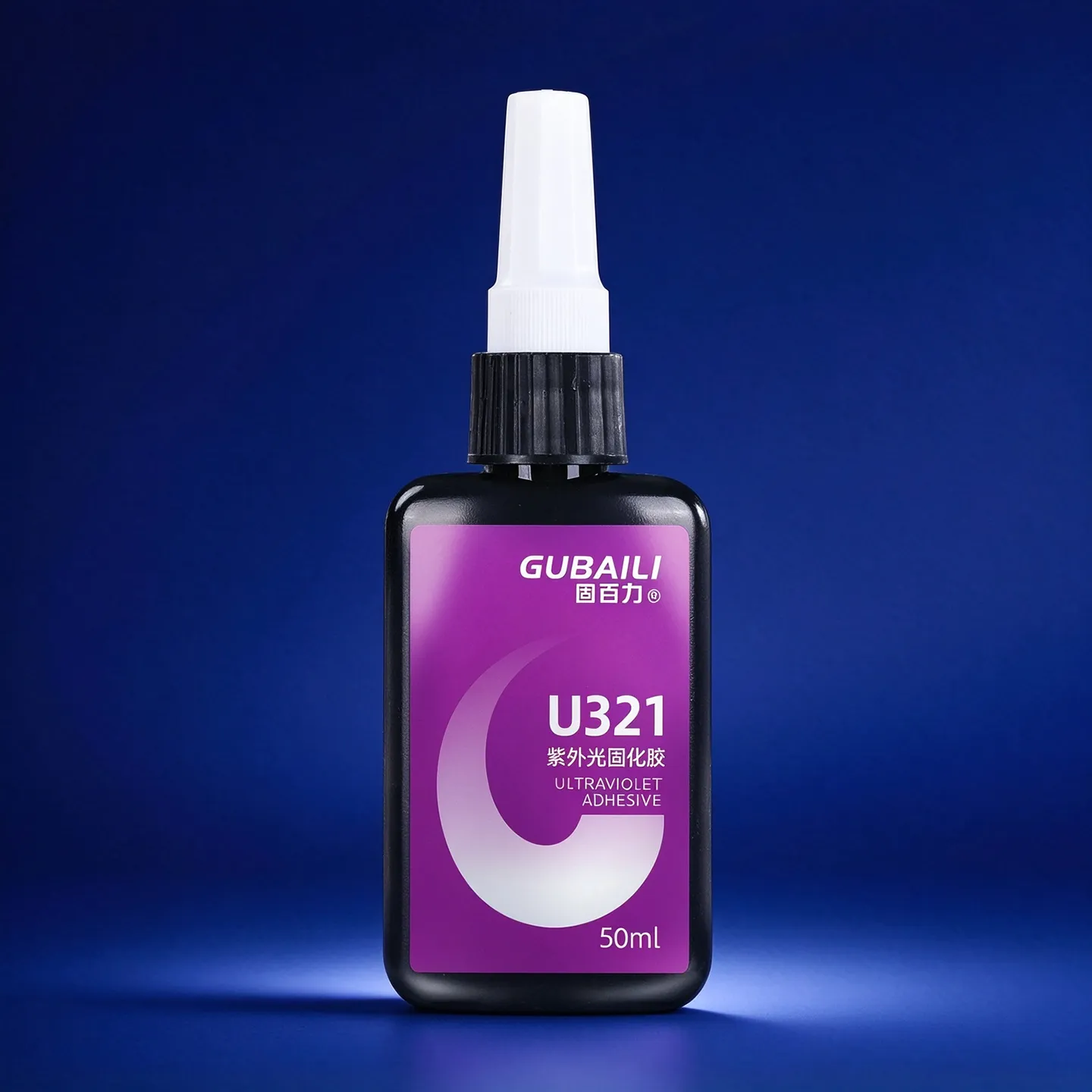
Choose U321 for glass, crystal and handicrafts; U322 for transparent plastics such as acrylic, PC and PS; U323 for glass-to-metal and hardware composite parts.
Confirm that the substrate transmits UV light, and check bond-line thickness and lamp distance. If the metal side is opaque, use a dual-cure system or irradiate from the transparent side after dispensing.
For composite bonding of lighting, hardware and glass, combining a clear appearance with adhesion to metal.
If the metal side is opaque, ensure the transparent side allows UV light to reach the bond line, or use a dual-cure system.
We customise formulations by substrate, viscosity, cure speed and media resistance, and provide sample testing and technical selection support.
Tell us about your application and our engineers will provide product recommendations, sample dispatch and technical support within 48 hours.