
Evaluating Retaining Compounds for Precision Assembly
Retaining compounds are essential for precision assembly, offering high strength, reliability, and ease of use. Key considerations include chemical composition, viscosity, cure time, and thermal resistance.
Key Takeaways
- Understanding the chemistry of retaining compounds is crucial for selecting the right product.
- Viscosity, cure time, and thermal resistance are critical parameters for precision assembly applications.
- Proper surface preparation and application techniques ensure optimal bond strength and durability.
- Application-specific requirements dictate the choice between anaerobic, cyanoacrylate, or epoxy-based retaining compounds.
Introduction to Retaining Compounds
Retaining compounds are specialized adhesives designed to secure cylindrical parts, such as bearings, gears, and shafts, in place. These compounds provide a strong, durable, and reliable bond that can withstand mechanical stress, temperature variations, and environmental conditions. In precision assembly, the choice of the right retaining compound is critical to ensure the longevity and performance of the assembled components.
Chemistry of Retaining Compounds
Retaining compounds are available in various chemistries, each with distinct properties and application benefits. The primary types include:
- Anaerobic Adhesives: These adhesives cure in the absence of air and are ideal for metal-to-metal bonding. They offer excellent shear strength and are commonly used in threadlocking and retaining applications.
- Cyanoacrylate Adhesives: Known for their fast-curing properties, these adhesives are suitable for small, precise assemblies. They provide high tensile and shear strength but may have limitations in terms withstanding high temperatures and prolonged exposure to chemicals.
- Epoxy Adhesives: Epoxy-based retaining compounds are two-part systems that offer superior strength, chemical resistance, and thermal stability. They are ideal for applications requiring high load-bearing capacity and long-term durability.
Key Parameters for Evaluation
When evaluating retaining compounds for precision assembly, several key parameters must be considered to ensure optimal performance:
Viscosity
The viscosity of a retaining compound determines its flow characteristics and ease of application. High-viscosity compounds are suitable for filling large gaps and vertical surfaces, while low-viscosity compounds are better for tight fits and horizontal applications.
Cure Time
The cure time of a retaining compound affects the assembly process and production efficiency. Fast-curing adhesives, such as cyanoacrylates, are ideal for rapid assembly, while slower-curing anaerobic and epoxy adhesives provide more flexibility in the assembly process.
Thermal Resistance
The ability of a retaining compound to withstand high temperatures is crucial for applications involving heat, such as in automotive and industrial environments. Epoxy-based compounds typically offer the highest thermal resistance, followed by anaerobic adhesives.
Application Scenarios
Retaining compounds find wide-ranging applications in various industries, including automotive, electronics, and machinery. Here are some specific scenarios where retaining compounds are essential:
Automotive Industry
In the automotive sector, retaining compounds are used to secure bearings, gears, and other rotating parts. They ensure that components remain in place under high mechanical loads and temperature variations, enhancing the overall performance and safety of the vehicle.
Electronics Assembly
For electronic devices, retaining compounds are used to secure small components, such as connectors and sensors, ensuring they remain in place during operation. Cyanoacrylate adhesives are often preferred due to their fast-curing properties and suitability for small, precise assemblies.
Machinery and Equipment
In heavy machinery and equipment, retaining compounds are used to secure large, heavy components. Epoxy-based adhesives are commonly chosen for their high strength and durability, ensuring that the assembled parts can withstand harsh operating conditions.
Comparison of Retaining Compound Chemistries
| Parameter | Anaerobic Adhesives | Cyanoacrylate Adhesives | Epoxy Adhesives |
|---|---|---|---|
| Viscosity | Medium to High | Low to Medium | High |
| Cure Time | Minutes to Hours | Seconds to Minutes | Minutes to Hours |
| Thermal Resistance (°C) | Up to 150°C | Up to 80°C | Up to 200°C |
| Shear Strength (MPa) | 10-25 MPa | 20-30 MPa | 30-60 MPa |
| Chemical Resistance | Good | Fair | Excellent |
The following parameter comparison is for reference. Each type of retaining compound has suitable applications depending on the specific requirements of the assembly.
Surface Preparation and Application Techniques
Proper surface preparation and application techniques are essential for achieving optimal bond strength and durability. Here are some best practices:
- Cleaning: Ensure that the surfaces to be bonded are clean, dry, and free from contaminants such as oil, grease, and dust.
- Activation: For anaerobic adhesives, apply an activator to one or both surfaces to initiate the curing process, especially in large gaps or when a faster cure is required.
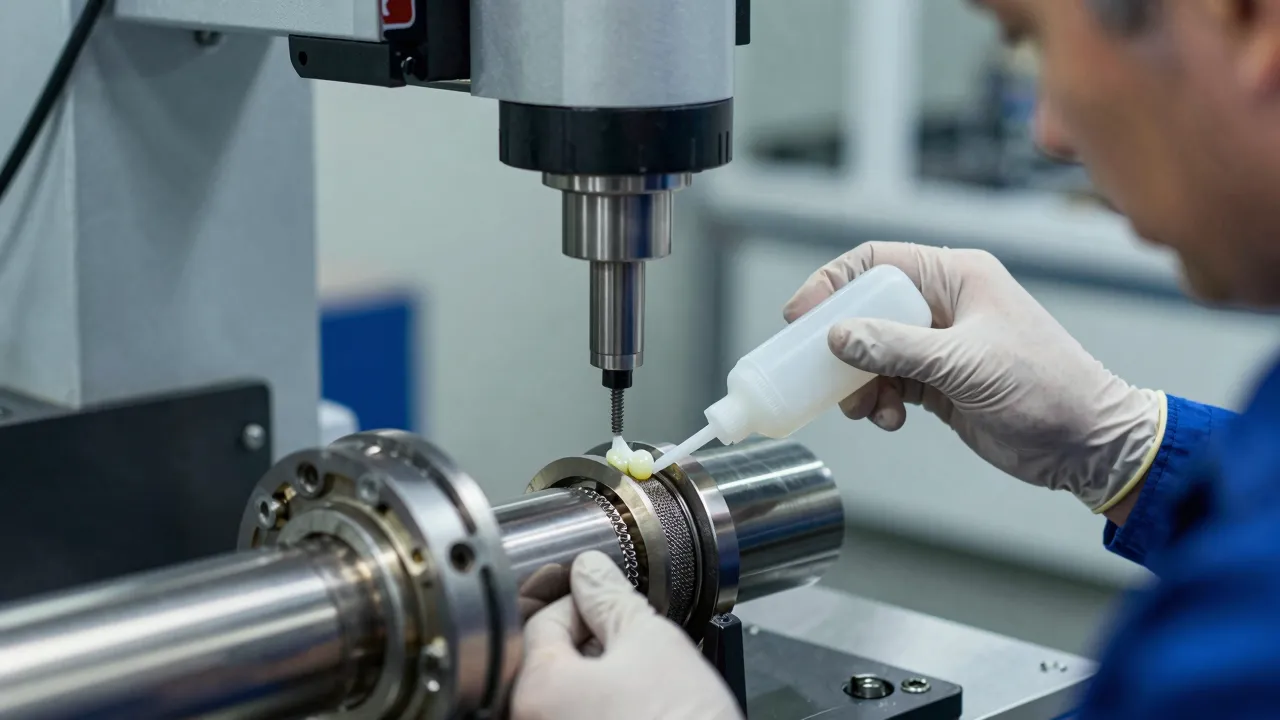
- Application: Apply the retaining compound evenly to one surface and then assemble the parts. Ensure that the parts are aligned correctly before the adhesive cures.
- Curing: Allow the adhesive to cure at the recommended temperature and time. For faster curing, consider using heat or UV light, depending on the adhesive type.
Conclusion
Retaining compounds play a vital role in precision assembly, providing the necessary strength, reliability, and durability. By understanding the chemistry, key parameters, and application scenarios, R&D engineers and procurement decision-makers can select the most suitable retaining compound for their specific needs. GUBAILI offers a range of high-performance retaining compounds, ensuring that you have the right solution for your precision assembly challenges.
FAQs
What are the main types of retaining compounds?
The main types of retaining compounds include anaerobic adhesives, cyanoacrylate adhesives, and epoxy adhesives, each with distinct properties and applications.
How do I choose the right retaining compound for my application?
Select the right retaining compound by considering the viscosity, cure time, thermal resistance, and chemical resistance required for your specific application. Consult technical data sheets and application guidelines for detailed information.
What is the importance of surface preparation in applying retaining compounds?
Surface preparation is crucial for achieving optimal bond strength and durability. Clean, dry, and contaminant-free surfaces ensure that the retaining compound adheres properly and performs as intended.
Can retaining compounds be used in high-temperature applications?
Yes, retaining compounds, particularly epoxy-based ones, can be used in high-temperature applications. They offer excellent thermal resistance, making them suitable for automotive and industrial environments.
How do I accelerate the curing process of retaining compounds?
To accelerate the curing process, you can use activators for anaerobic adhesives, apply heat for all types of adhesives, or use UV light for UV-curing adhesives. Always follow the manufacturer's recommendations for the best results.