Industrial Adhesives & Sealants Manufacturer

 Instant Adhesives
Video
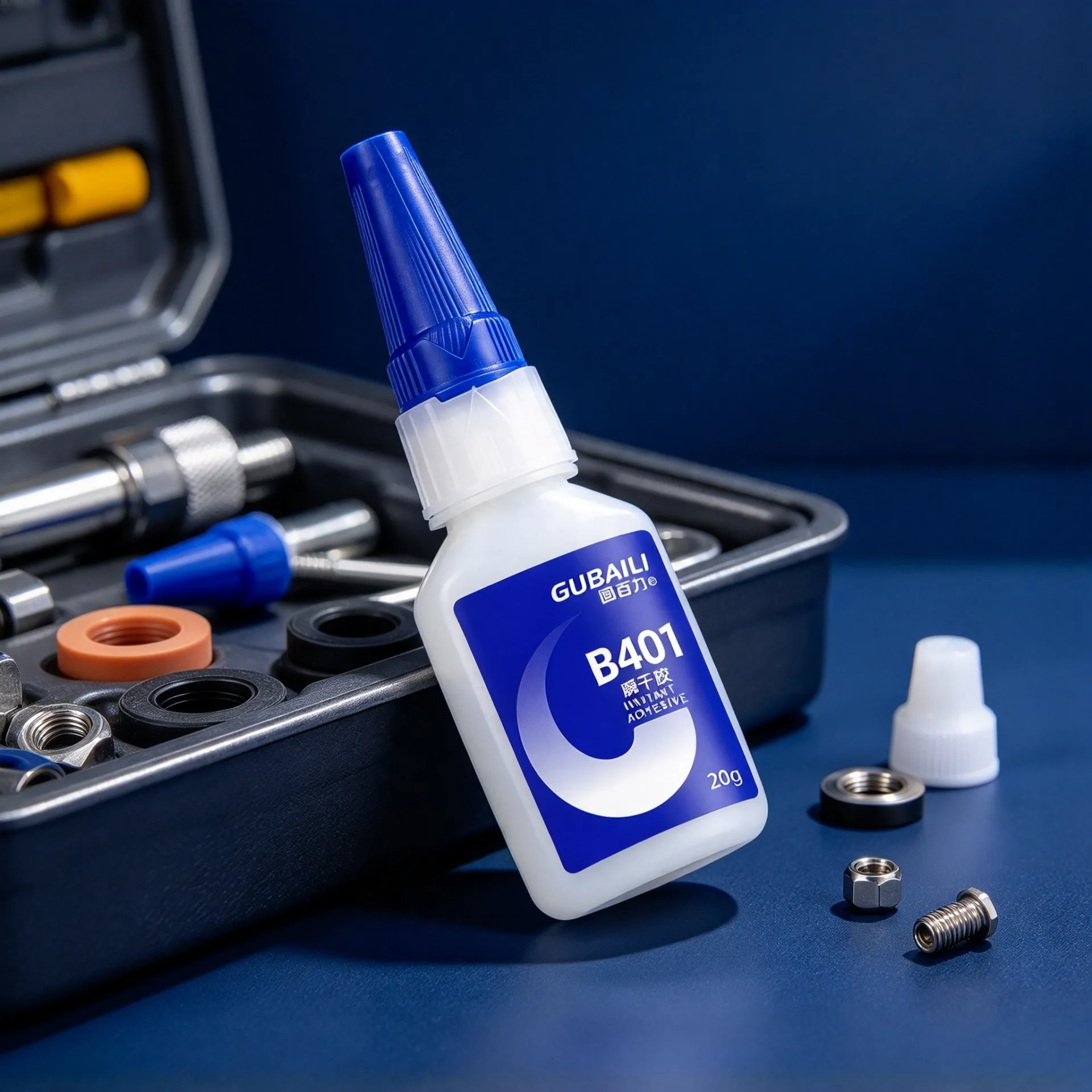
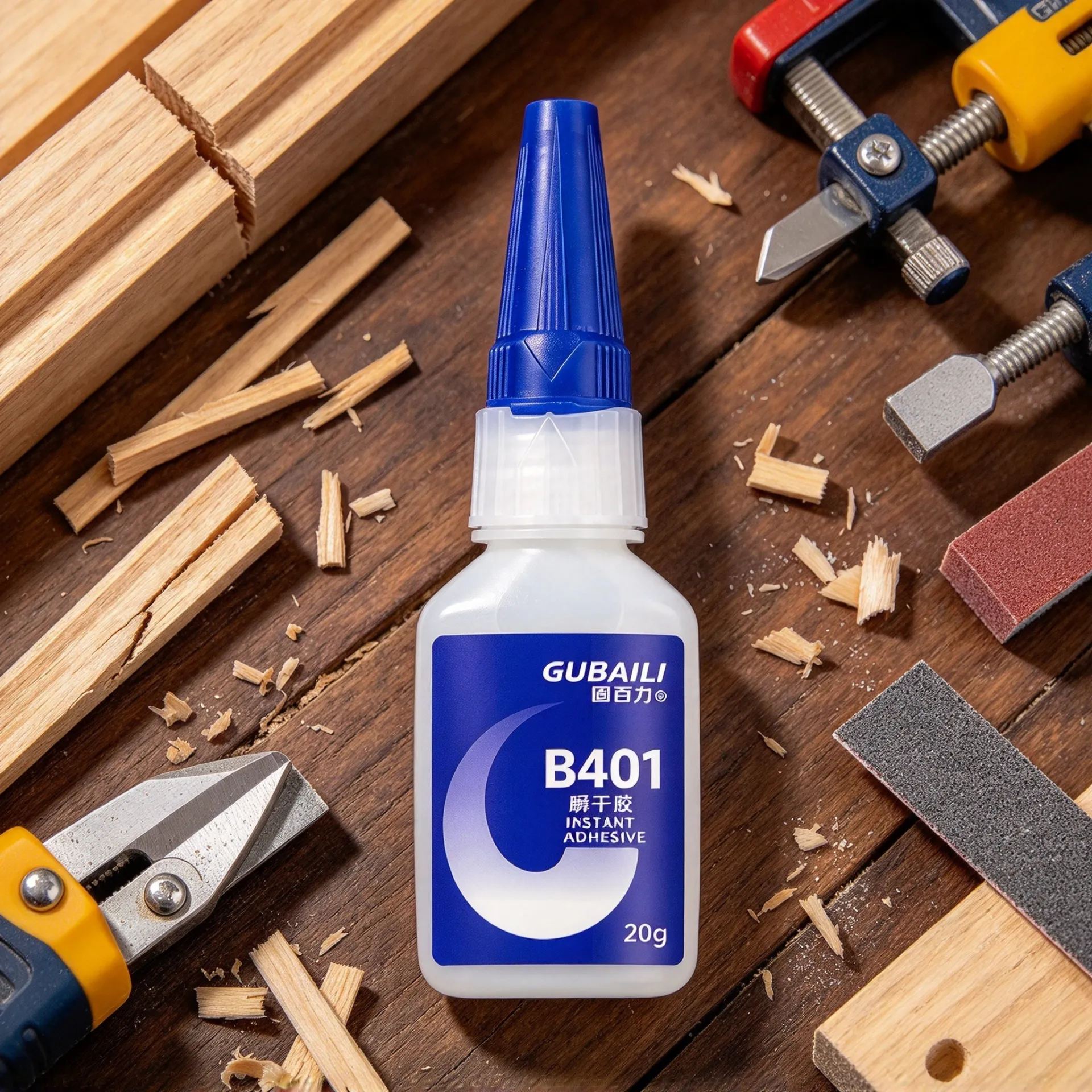
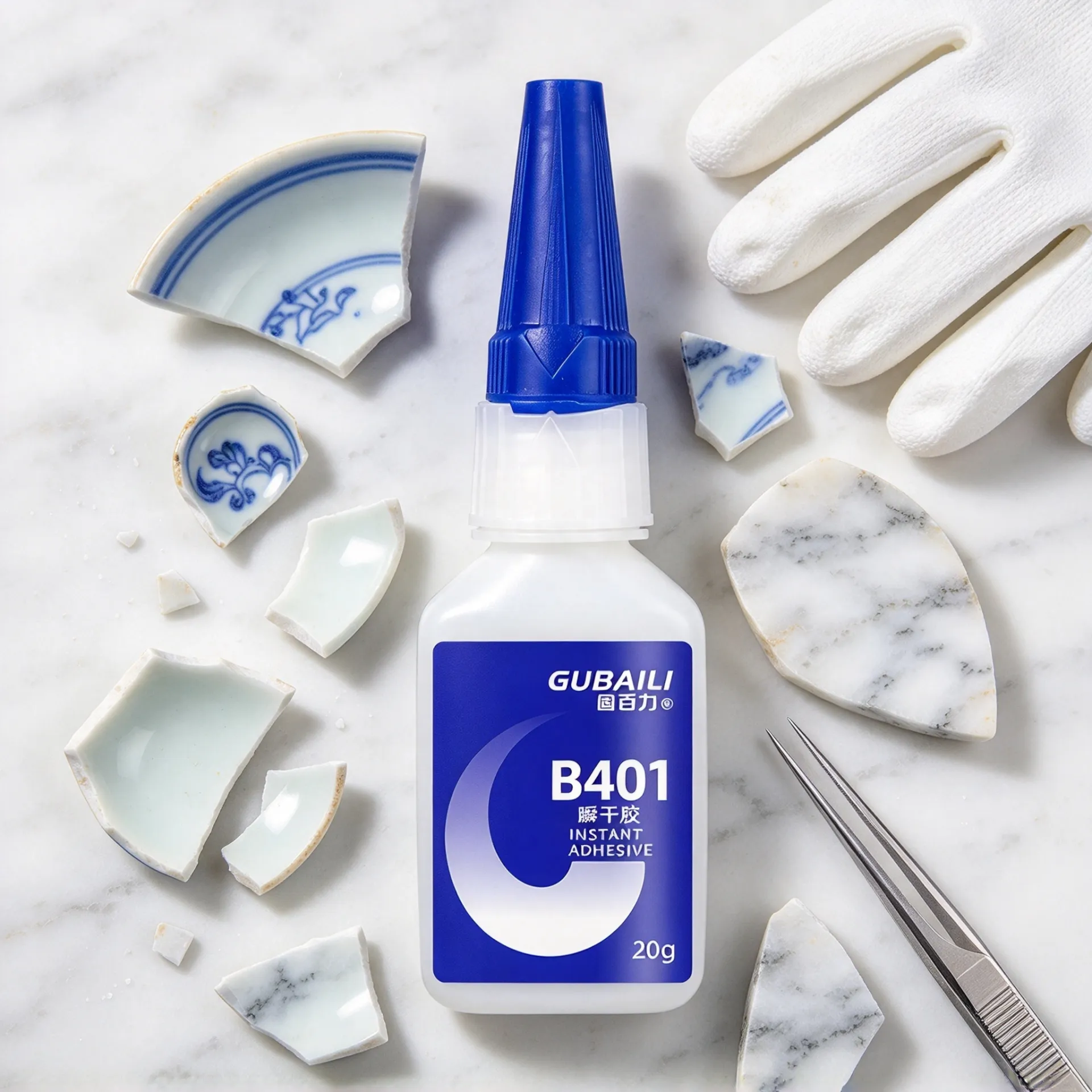
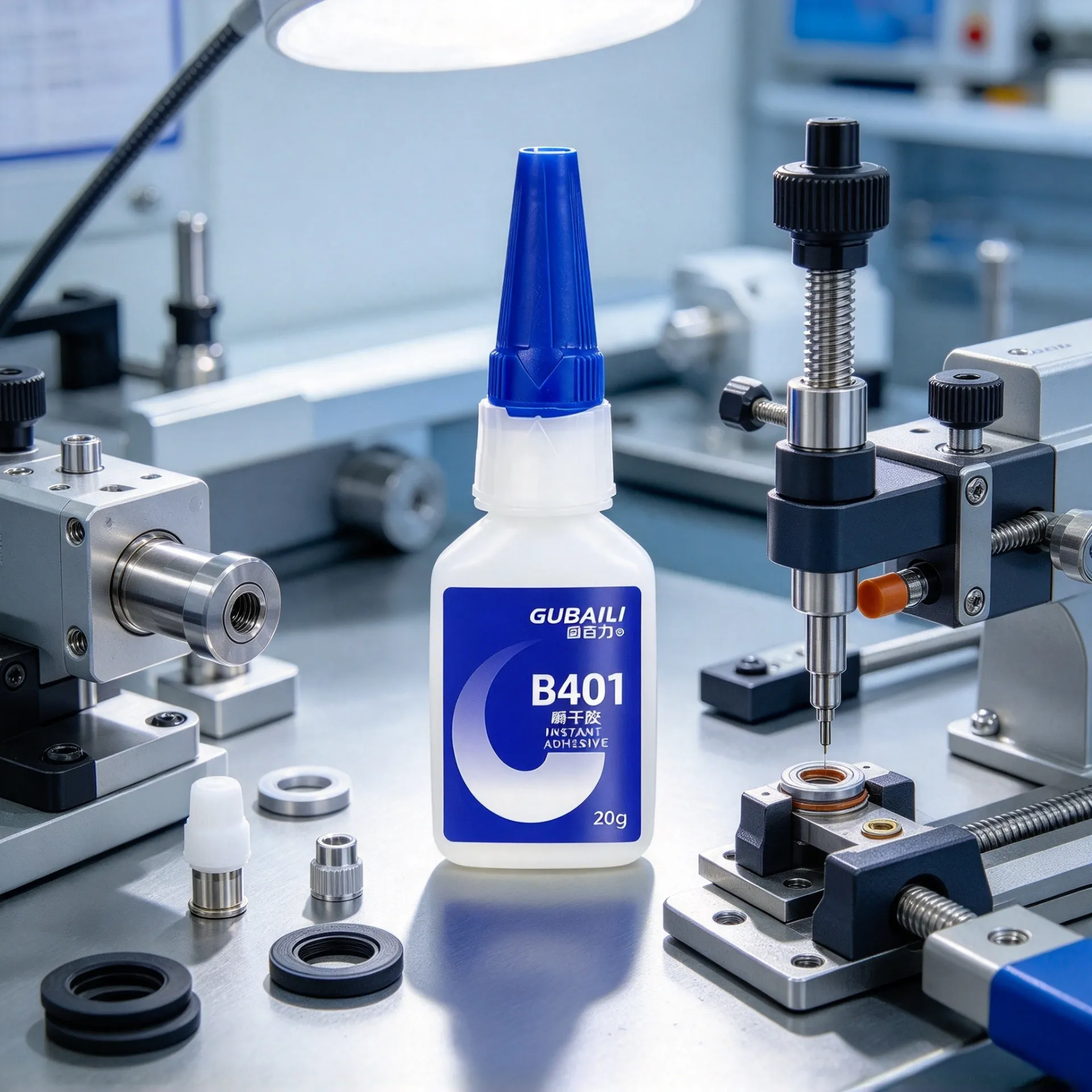
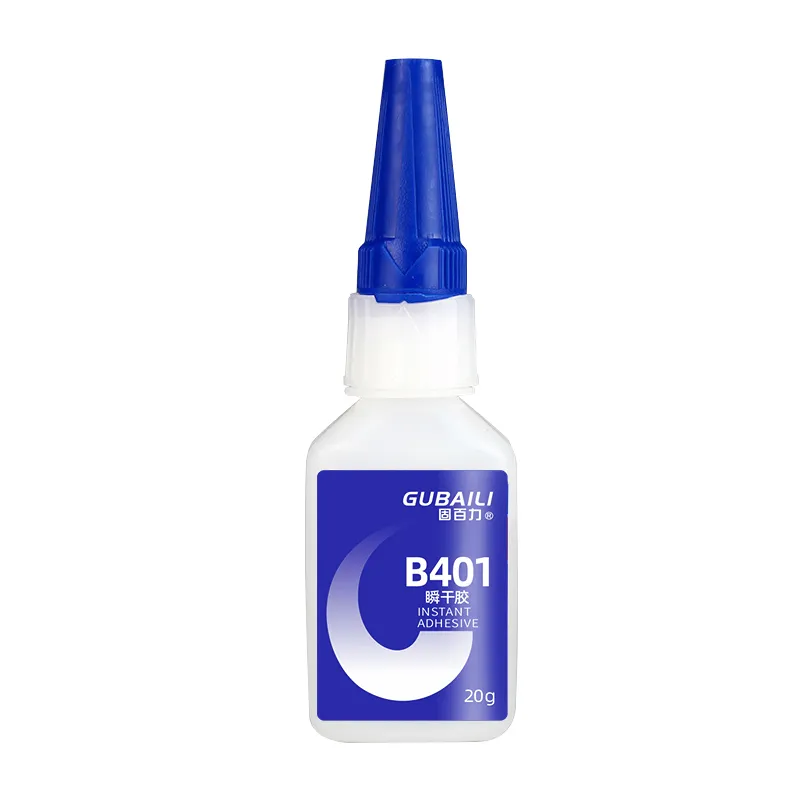
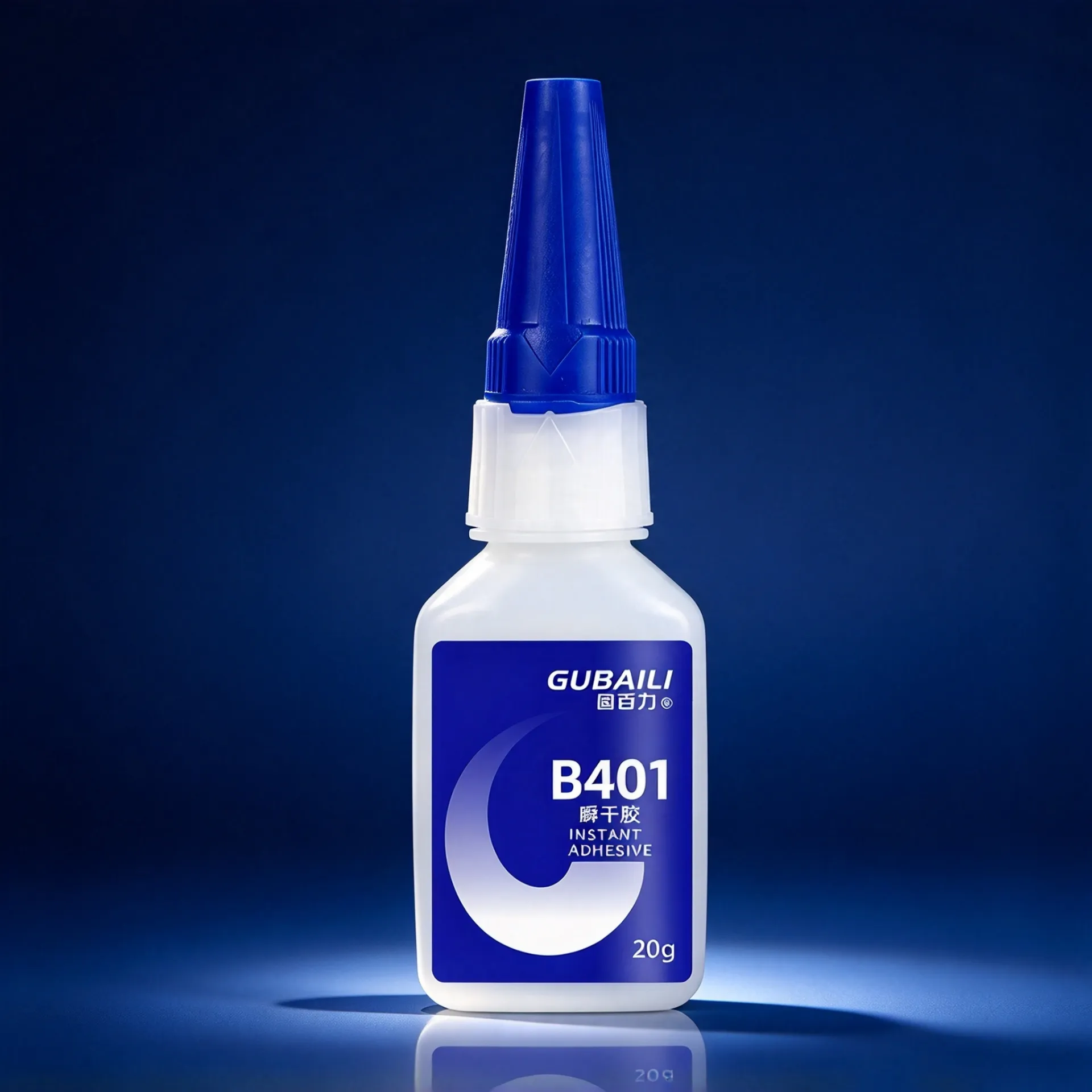
GUBAILI 401 low-viscosity instant adhesive: 5-second initial set on steel, high strength, bonds metals, plastics and elastomers, and works on chrome/acidic surfaces as well as porous substrates such as wood, leather and paper. Service temperature -40°C to 120°C. Ideal for fast industrial assembly, available in multiple pack sizes.
High bond strength for structural joints under heavy loads.
Fast surface drying to shorten waiting time.
Fixtures and cures within seconds for instant bonding.
Universal compatibility with a wide range of substrates.
| Parameter | Specification / Value |
|---|---|
| Viscosity | 100 cP |
| Color | Clear |
| Gap Fill | 0.005 in. (0.15 mm) |
| Cure Time, Steel | 5 seconds |
| Shear Strength | 2,900 psi (20 N/mm²) |
| Temperature Range | -40°C to 120°C |
| Key Properties | General-purpose, high strength, low viscosity, fast curing |
| Substrates | Metals, plastics and elastomers; acidic surfaces (chrome/plated), wood, paper, leather, cork, fabric |
| Applications | Electronics and electrical, crafts, leather goods and textiles, wood products, hardware and plastic small-part assembly |
| Packaging | 20 g / 50 g / 500 g / 1000 g |
Product Overview
GUBAILI 401 is a low-viscosity, general-purpose cyanoacrylate instant adhesive with fast curing and high bond strength. It is a one-component product that requires no mixing and cures at room temperature through trace moisture on the substrate surface, forming a strong bond within seconds. Its good flow makes it suitable for parts with small gaps, covering both dense and porous substrates, and it performs exceptionally well on acidic surfaces such as chrome and electroplated finishes—an area where ordinary instant adhesives often struggle.
Core Performance
Viscosity 100 cP, clear liquid, maximum gap fill 0.005 in. (0.15 mm), initial set on steel in 5 seconds, shear strength up to 2,900 psi (20 N/mm²), long-term service temperature -40°C to 120°C, with stable mechanical performance.
Substrates
Metals, plastics and elastomers; chrome/electroplated acidic surfaces; porous materials such as wood, paper, leather, cork and fabric.
Industries
Electronics and electrical appliances, toys and gifts, crafts, leather goods and textiles, woodworking, hardware fittings and small plastic part assembly. Suitable for fast assembly, repair and fixturing of small parts on production lines.
Instructions
1. Clean the bonding surfaces, removing oil, dust and mold release, and ensure they are dry and clean;
2. Apply a small amount of adhesive evenly—the layer should not be thick;
3. Join the parts and apply light pressure, holding them immobile until initial set;
4. Initial set only provides fixturing; full strength requires adequate cure time.
Precautions
1. This product bonds skin and eyes instantly. Wear protective gloves and avoid direct contact. If adhesive gets into the eyes, do not force them open—seek medical attention promptly;
2. Store sealed in a cool, dark place away from heat and open flame; keep out of reach of children;
3. Not suitable for filling large gaps, long-term water immersion, or difficult substrates such as pure PP/PTFE;
4. Work in a ventilated area and avoid accumulation of vapors.
Surfaces must be dry, free of oil, mold release and dust. Metal parts can be wiped with solvent and allowed to flash off completely; low-surface-energy plastics need a primer, otherwise false bonding is likely.
Apply a thin, even bead—enough to form a continuous film after clamping. Excess adhesive slows curing and increases blooming and squeeze-out. Seal porous materials before applying adhesive.
Fixturing usually takes seconds to tens of seconds, while final strength requires about 24 hours. Low temperature, large gaps or excess adhesive significantly slow the process.
To separate the parts, use a dedicated debonder or acetone allowed to wick along the bond line. Heat accelerates breakdown but may affect appearance parts. After separation, remove all residue before re-bonding.
Narrow the range down with three questions: what materials are being bonded or repaired, what problem you need to solve (reinforcement, leak sealing, threadlocking or sealing), and what temperature and media the joint will see. First rule out any model whose substrate is not on the approved list, then compare cure speed, gap-filling capability and temperature margin.
This step only establishes direction. Final confirmation should come from a trial: run a control sample on the same joint and record cure time, strength and appearance—more reliable than a data sheet alone.
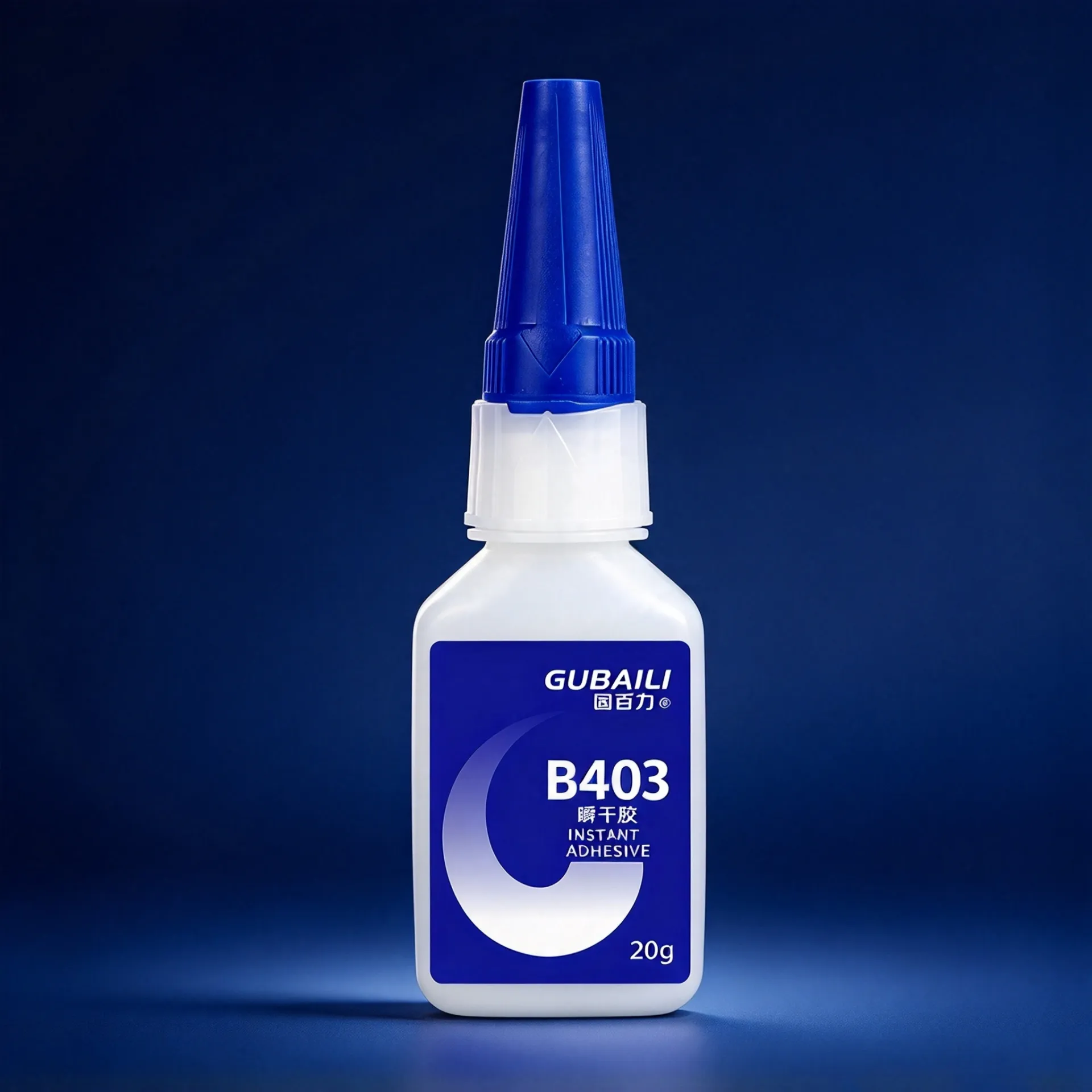
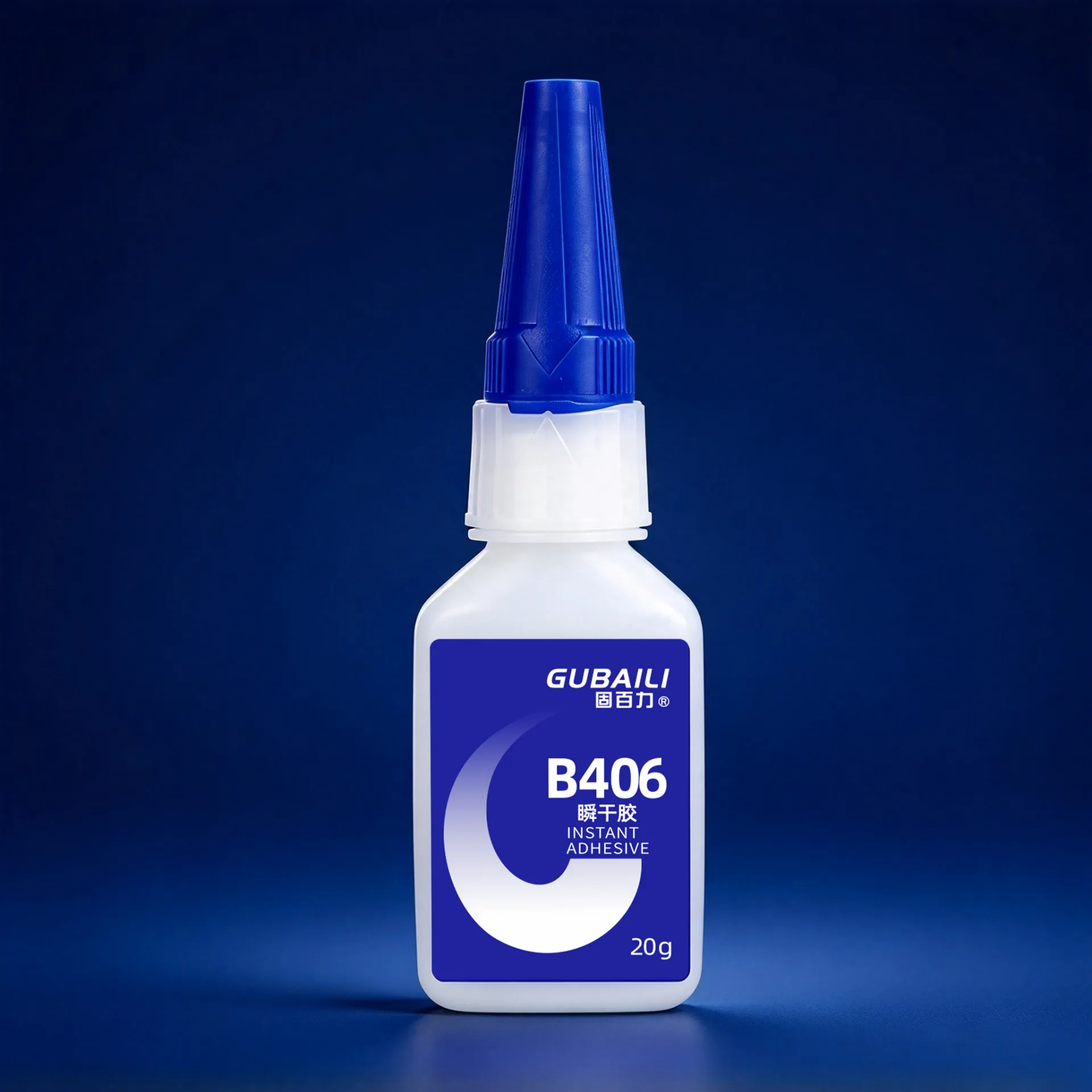
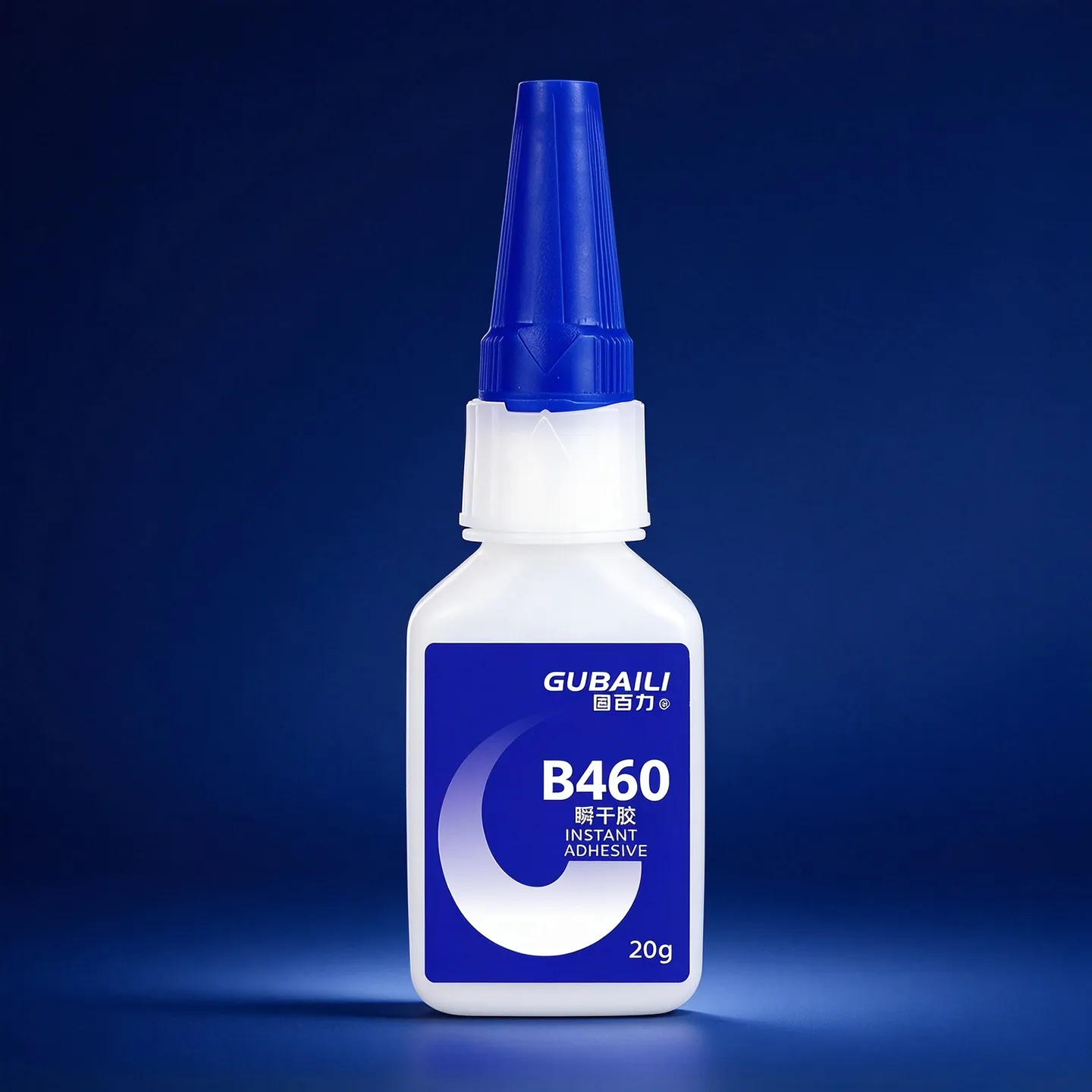
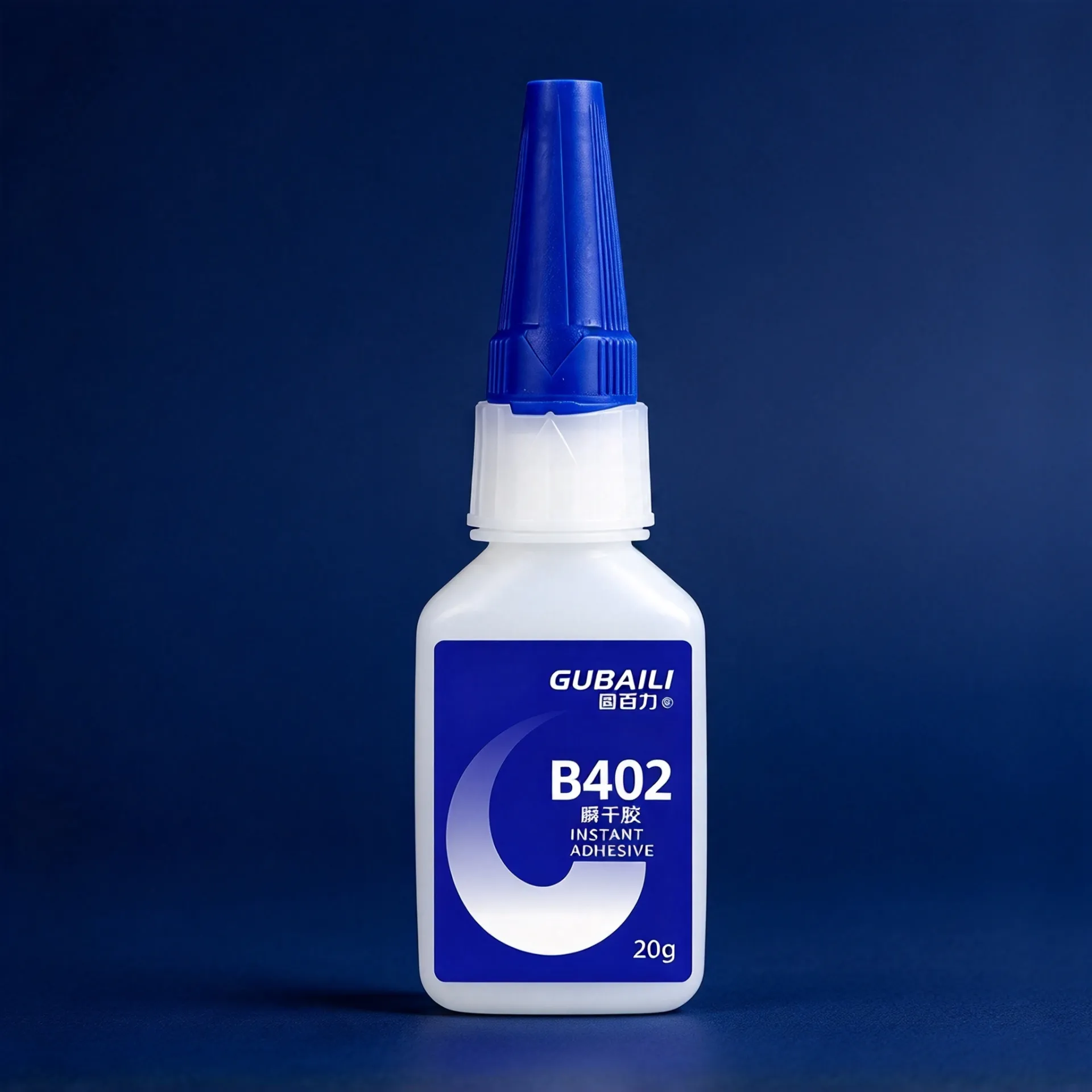
For general bonding, choose 401; for high temperature or near heat-generating components, choose 402; for appearance parts, transparent parts and low-odor requirements, choose 403 or 460; for penetrating tiny gaps in assembled parts, choose low-viscosity grades such as 406 or B495/B496.
Where impact resistance, peel resistance or small-gap filling is needed, prefer the toughened B480. First establish direction by substrate and operating conditions, then confirm cure speed and strength with actual test parts.
A general-purpose instant adhesive for fast fixturing of metals, plastics, rubber and wood at small-to-medium gaps, commonly used for fixing small parts on assembly lines.
Porous materials or acidic surfaces slow curing significantly; use a primer and clamp promptly after dispensing to avoid prolonged exposure.
We customise formulations by substrate, viscosity, cure speed and media resistance, and provide sample testing and technical selection support.
Tell us about your application and our engineers will provide product recommendations, sample dispatch and technical support within 48 hours.