Industrial Adhesives & Sealants Manufacturer

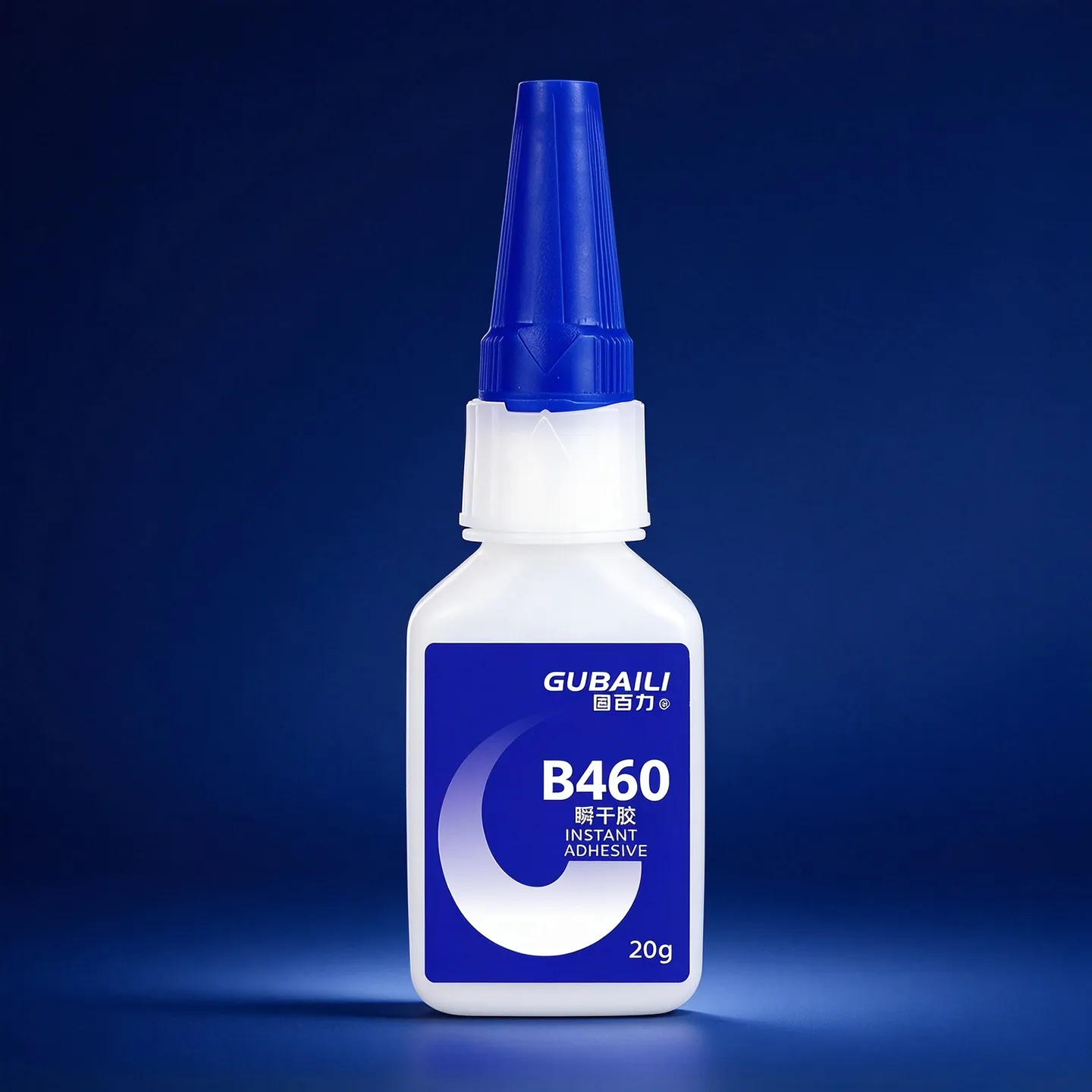
GUBAILI 460 instant adhesive: pale yellow/clear, viscosity 40 cP, low blooming and low odor, gap fill 0.24 mm, cure in 20 seconds, service temperature -40°C to 80°C. For metals, plastics, elastomers and porous materials such as paper, wood, foam and fabric. Ideal for high-appearance bonding. 20 g/500 g/1000 g packs.
High bond strength for structural joints under heavy loads.
Excellent flow and penetration for bonding tight gaps.
Minimal blooming after cure keeps surfaces clean.
Low odor for a more comfortable working environment.
| Parameter | Specification / Value |
|---|---|
| Viscosity | 40 cP |
| Color | Pale yellow/clear |
| Gap Fill | 0.008 in. (0.24 mm) |
| Cure Time (Steel) | 20 seconds |
| Shear Strength | 2,950 psi (20.3 N/mm²) |
| Temperature Range | -40°C to 80°C (-40°F to 175°F) |
| Key Properties | Colorless, low odor, low viscosity, low blooming |
| Substrates | Metals, plastics, elastomers and absorbent materials |
| Packaging | 20 g / 500 g / 1000 g |
Product Overview
GUBAILI 460 is a low-viscosity, low-blooming, low-odor cyanoacrylate adhesive. The adhesive is pale yellow/clear with excellent bloom suppression and a mild odor, making it very suitable for appearance-critical products. Viscosity 40 cP, gap fill up to 0.008 in. (0.24 mm), cure time on steel 20 seconds, steel-to-steel shear strength up to 2,950 psi (20.3 N/mm²), service temperature -40°C to 80°C (-40°F to 175°F). It balances flow and gap-filling capability for both dense substrates and porous absorbent materials.
Substrates
Metals, plastics, elastomers and various absorbent porous materials.
Applications
For bonding metals, plastics, elastomers and absorbent materials. Its low-blooming, low-odor characteristics suit high-appearance assemblies, and it bonds porous materials such as paper, wood, cork, foam and fabric. Widely used for appearance parts in crafts, gifts, rubber and plastic decorative parts, textiles and leather goods.
Instructions
1. Clean and dry the bonding surfaces, removing oil, dust and mold release. For porous substrates, control the amount applied to prevent excessive penetration.
2. Apply a small amount, join the parts, and hold under pressure for 20 seconds for initial set; final strength is reached after 24 hours.
3. Good ventilation further reduces the risk of blooming; take care in high-humidity environments.
Precautions
1. Fast curing—wear protective gloves and avoid contact with skin and eyes. Do not pull bonded skin apart; soak in warm water and separate slowly. If adhesive gets into the eyes, flush immediately with plenty of water and seek medical attention.
2. Store sealed, away from light, in a cool, dry place, away from heat and open flame. Do not store with amine accelerators or alkaline materials.
3. Not suitable for long-term water immersion, continuous high temperature, or structural bonding under heavy impact loads.
Packaging: 20 g / 500 g / 1000 g
Surfaces must be dry, free of oil, mold release and dust. Metal parts can be wiped with solvent and allowed to flash off completely; low-surface-energy plastics need a primer, otherwise false bonding is likely.
Apply a thin, even bead—enough to form a continuous film after clamping. Excess adhesive slows curing and increases blooming and squeeze-out. Seal porous materials before applying adhesive.
Fixturing usually takes seconds to tens of seconds, while final strength requires about 24 hours. Low temperature, large gaps or excess adhesive significantly slow the process.
To separate the parts, use a dedicated debonder or acetone allowed to wick along the bond line. Heat accelerates breakdown but may affect appearance parts. After separation, remove all residue before re-bonding.
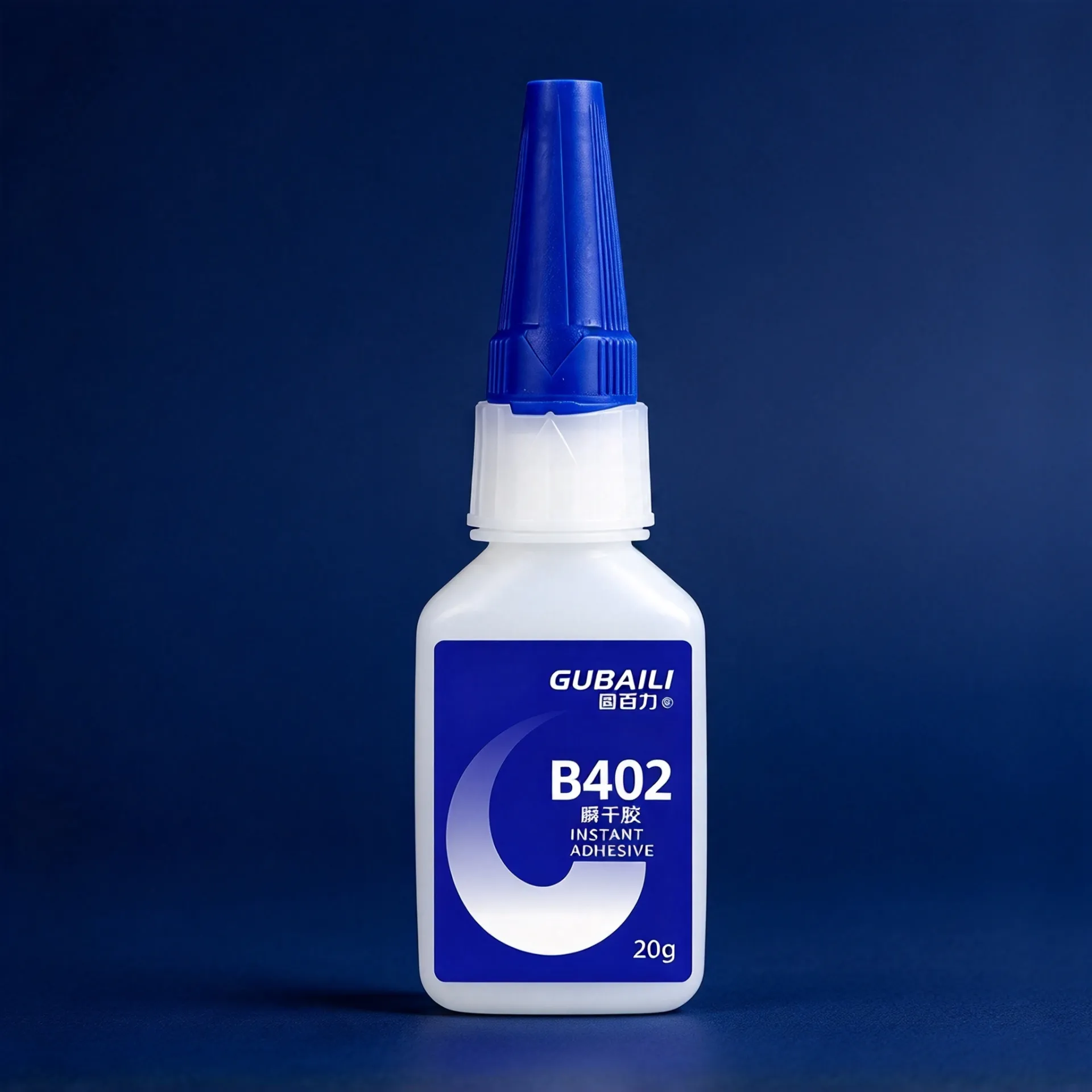
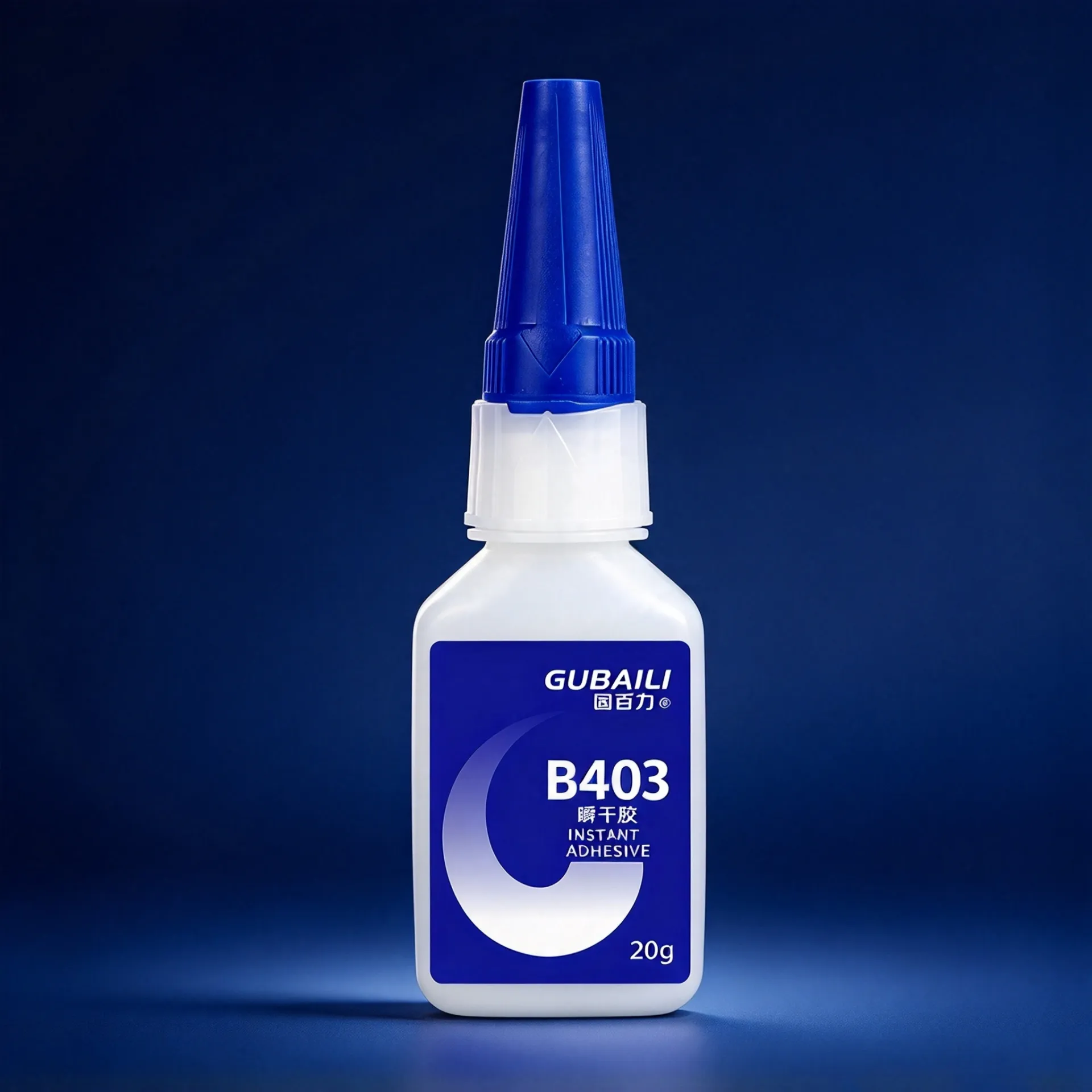
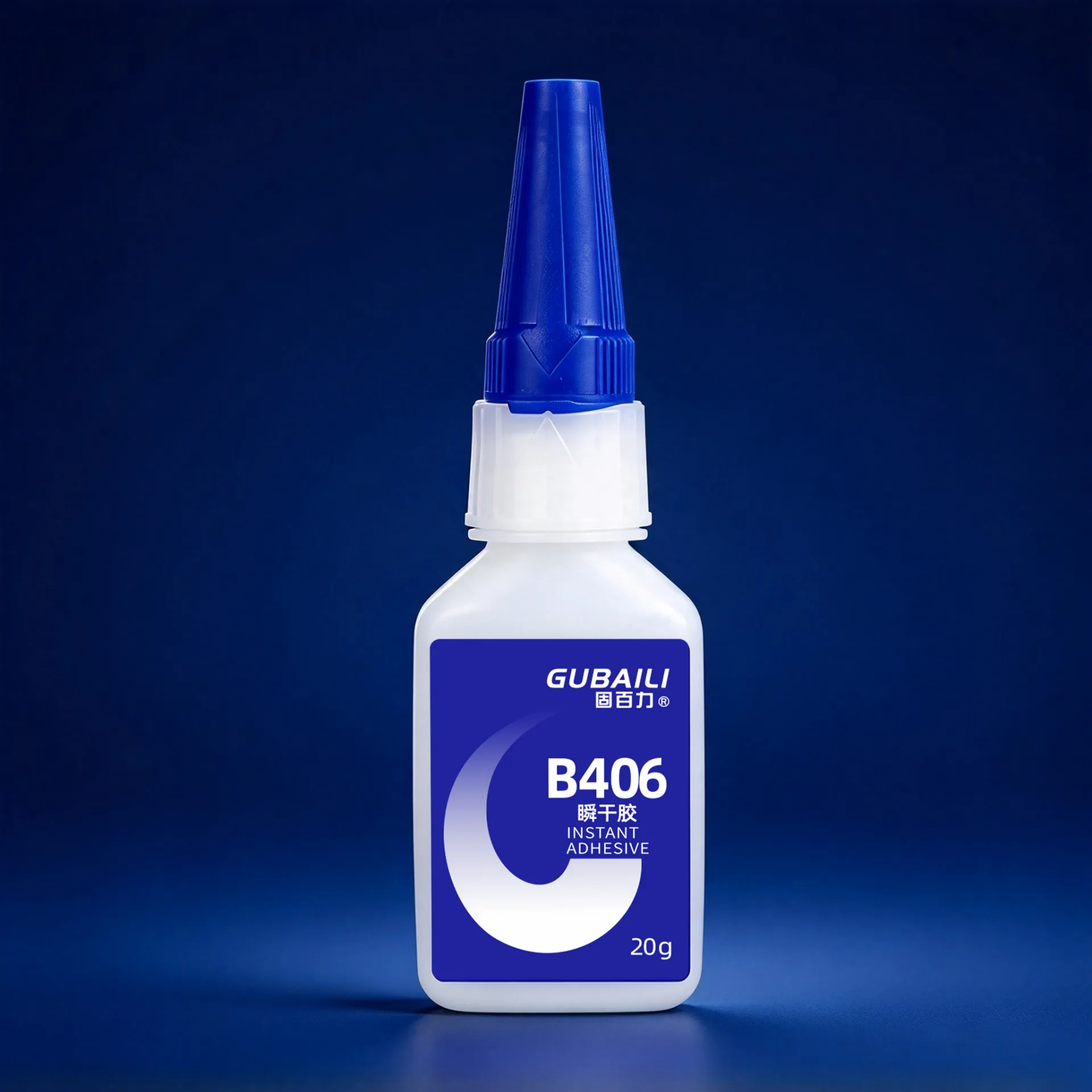
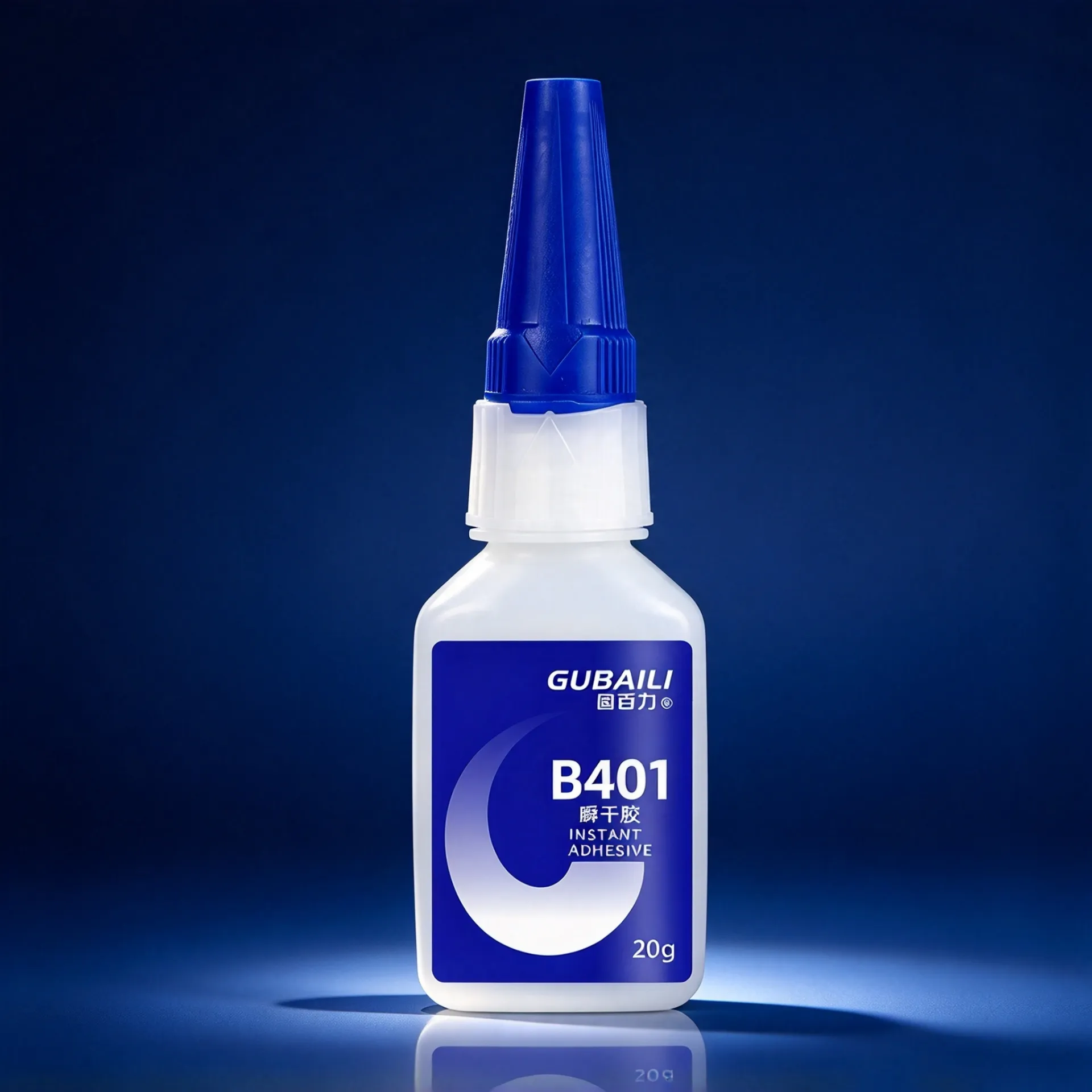
For general bonding, choose 401; for high temperature or near heat-generating components, choose 402; for appearance parts, transparent parts and low-odor requirements, choose 403 or 460; for penetrating tiny gaps in assembled parts, choose low-viscosity grades such as 406 or B495/B496.
Where impact resistance, peel resistance or small-gap filling is needed, prefer the toughened B480. First establish direction by substrate and operating conditions, then confirm cure speed and strength with actual test parts.
Its low-blooming, low-odor formula suits appearance parts in plastic and metal, with medium cure speed and good versatility.
Choose between 460 and 403 based on actual blooming and odor requirements; run an appearance comparison before volume production.
We customise formulations by substrate, viscosity, cure speed and media resistance, and provide sample testing and technical selection support.
Tell us about your application and our engineers will provide product recommendations, sample dispatch and technical support within 48 hours.