Industrial Adhesives & Sealants Manufacturer

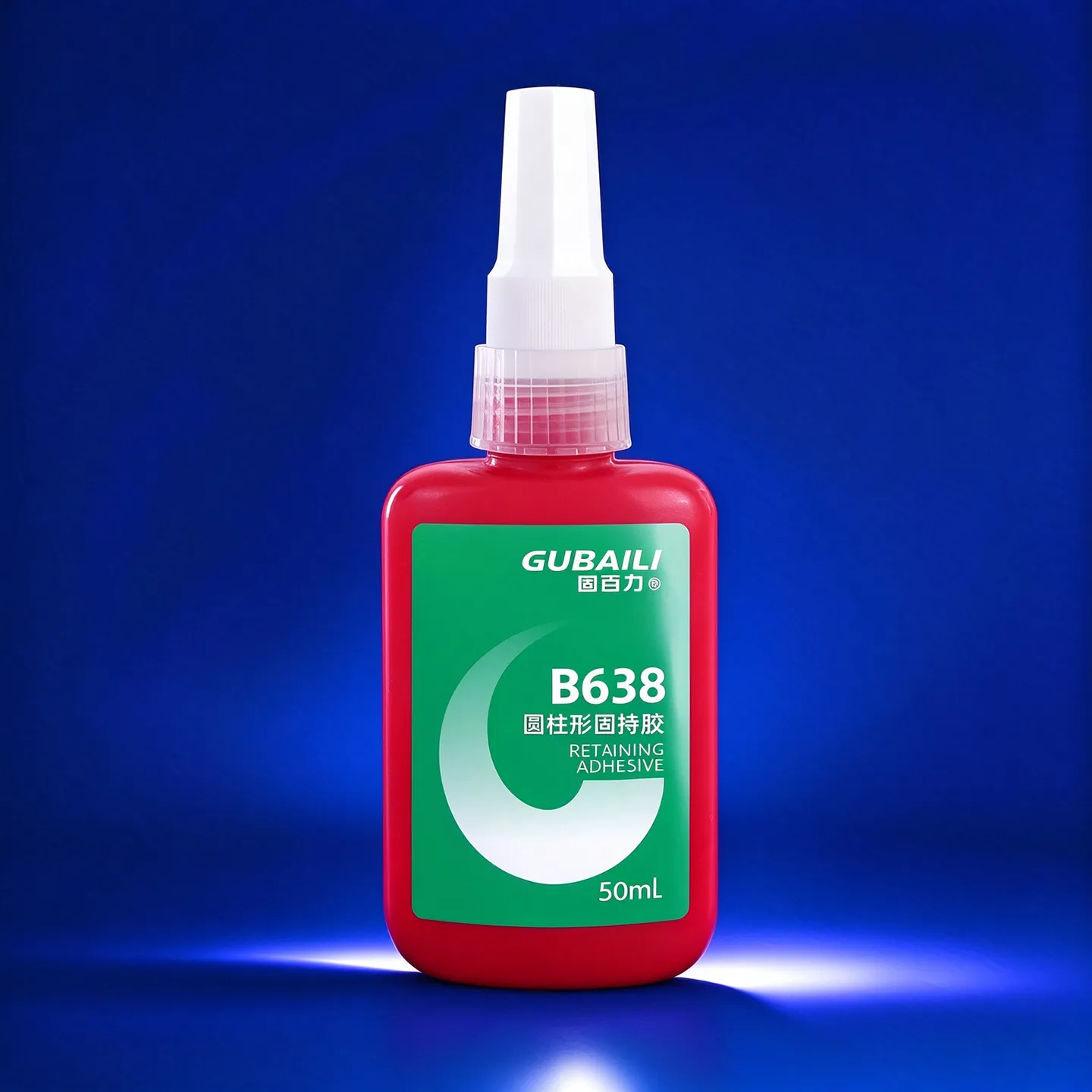
GUBAILI B638 green retaining compound: viscosity 2500 cP, high strength and light oil tolerance, no primer required, suitable for clearances within 0.25 mm, excellent load capacity. Service temperature -54 to 180°C. 50 ml/250 ml available.
High bond strength for structural joints under heavy loads.
Balanced flow for both penetration and gap filling.
Tolerates oily surfaces with reliable adhesion.
Stable performance over a wide temperature range.
| Parameter | Specification / Value |
|---|---|
| Viscosity | 2500 cP |
| Color | Green |
| Thixotropic | No |
| Radial Clearance | < 0.01 in. / 0.25 mm |
| Initial Set Time | 4 min |
| Compressive Shear Strength (Steel-to-Steel) | 4500 psi (31 N/mm²) |
| Temperature Range | -54°C ~ 180°C (-65°F ~ 355°F) |
| Key Properties | High-temperature resistant, medium viscosity, high strength, light oil tolerant, no primer required |
| Packaging | 50 ml / 250 ml |
Product Overview
GUBAILI B638 is a green, medium-viscosity anaerobic retaining compound with high strength and high-temperature resistance. It tolerates light oil contamination on substrate surfaces and has no thixotropy. This one-component anaerobic system requires no primer and cures normally even on passive metals such as stainless steel. It cures in confined metal clearances isolated from air, filling the fine clearance between shaft and bore and converting point and line contact of a mechanical interference fit into continuous surface bonding, greatly improving load capacity. The cured bond line withstands dynamic, axial and radial loads, suppressing fretting wear, loosening and media leakage during long-term operation. It cures reliably even with small amounts of oil or machining fluid on the parts, reducing pre-cleaning requirements.
Industries
For cylindrical fit assemblies with radial clearance within 0.25 mm. Widely used for retaining heavily loaded cylindrical components such as motors, reducers, bearings, bushings and gear sleeves, especially where thorough degreasing is difficult and light oil residue remains.
Instructions
1. Remove heavy oil, rust and dust from the mating surfaces first; light oil contamination does not affect curing;
2. Apply adhesive evenly to the shaft or bore wall and press the parts together quickly into position;
3. Initial set takes 4 minutes at room temperature; final cure strength is reached after 24 hours;
4. Keep radial clearance within 0.25 mm; excessive clearance reduces bond strength.
Precautions
1. Anaerobic adhesive cures only in oxygen-free confined metal gaps and will not cure when exposed to air;
2. Although it tolerates light oil, heavy oil or grease buildup significantly reduces strength;
3. Work in a ventilated area, avoid contact with skin and eyes, and wear protective equipment;
4. Not suitable for retaining plastic, rubber or other non-metallic substrates;
5. Store sealed in a cool, dark place away from heat and direct sunlight.
Degrease and derust both shaft and bore, and keep them dry. Apply adhesive evenly around the circumference of the mating surface, and rotate while pressing in to distribute the adhesive and expel air.
Use enough adhesive that a small bead squeezes out at the joint edge after assembly. Keep adhesive out of bearing races, oil holes and other moving parts, and let the assembly cure undisturbed per the process.
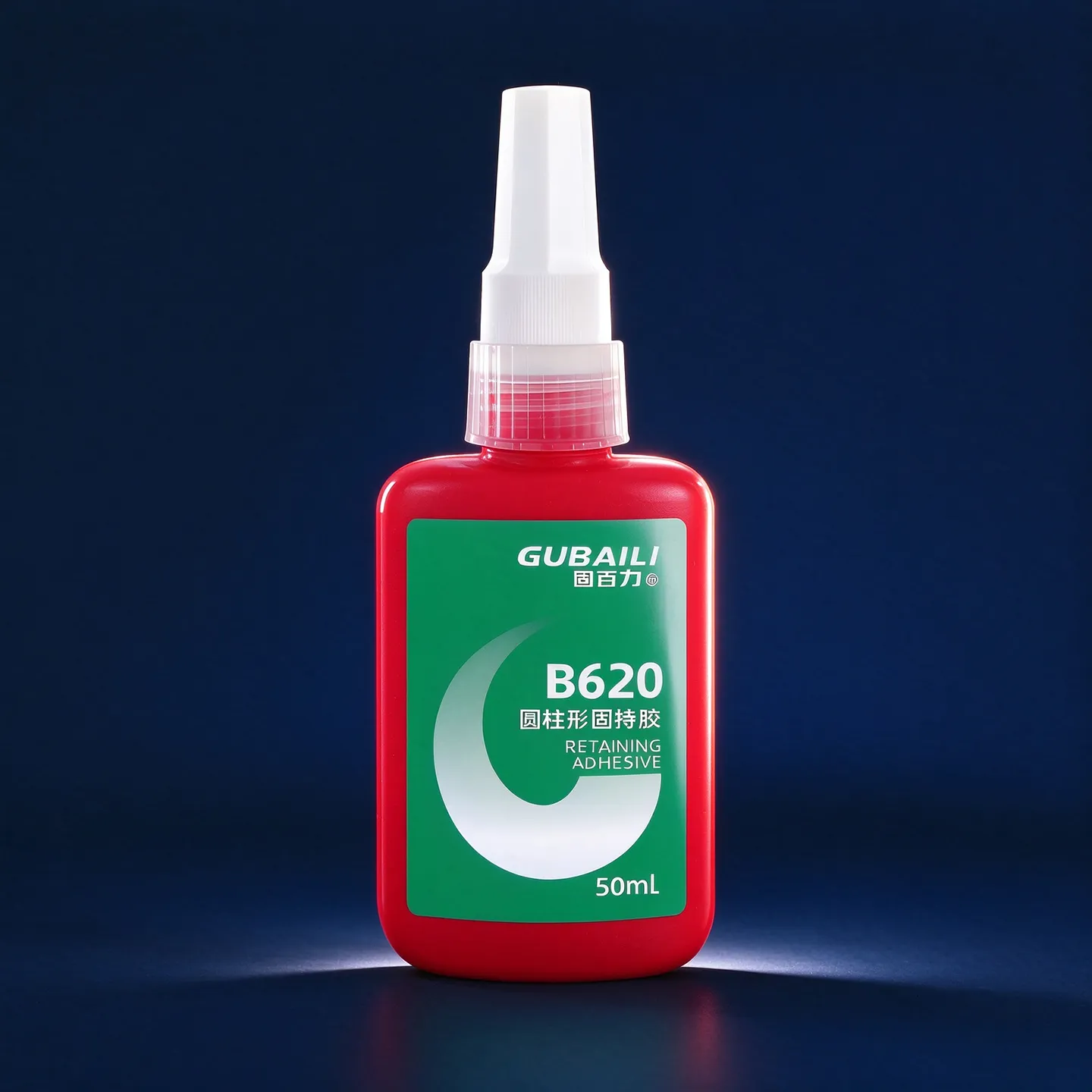
Standard grades suit general conditions; for long-term high temperature choose B620 or B648; for contact with oil or light oil contamination choose B638 or B648. Refer to the grade data sheet and actual testing for specific temperature ranges.
If the temperature limit is exceeded, switch to a structural adhesive or mechanical reinforcement—do not try to solve it by adding more adhesive.
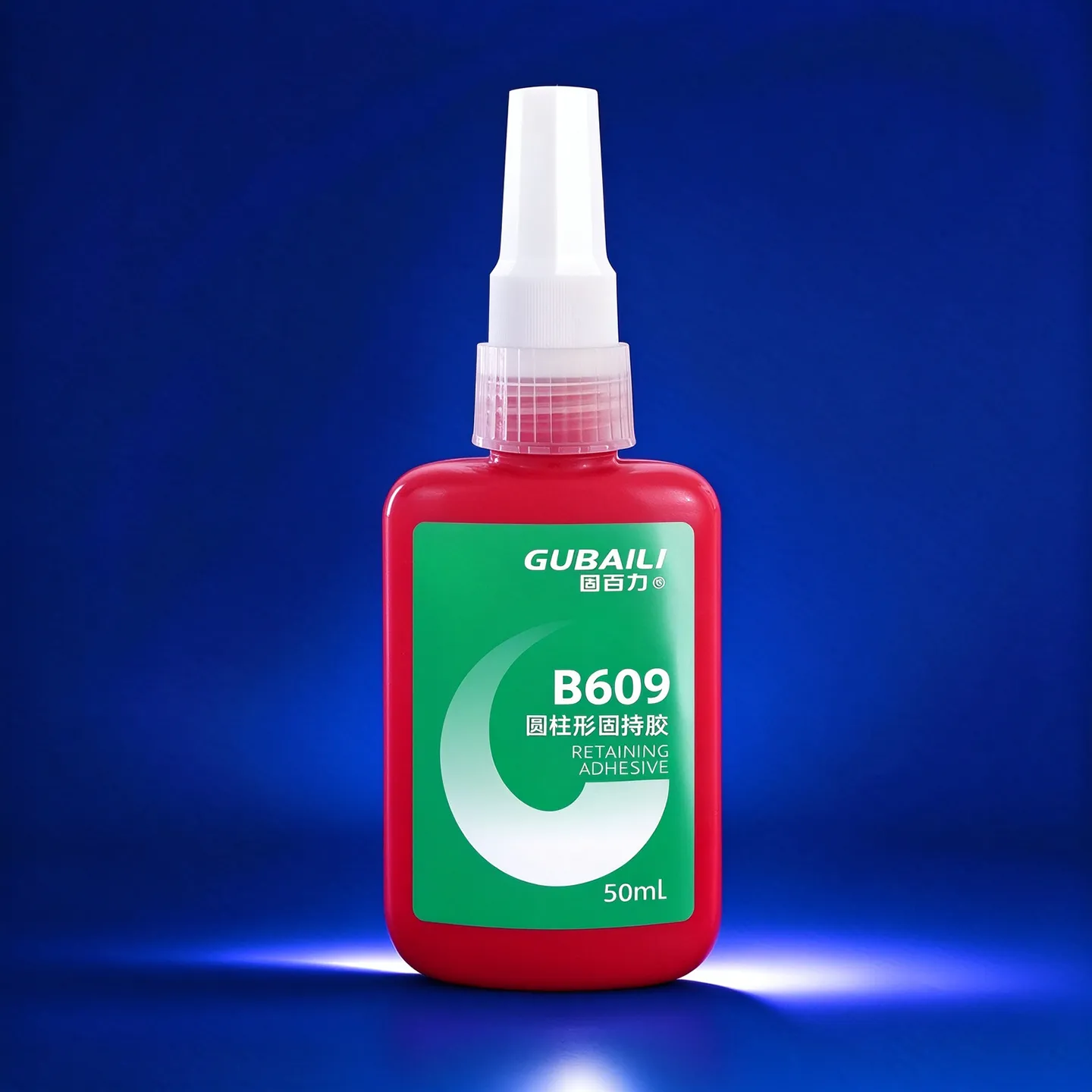
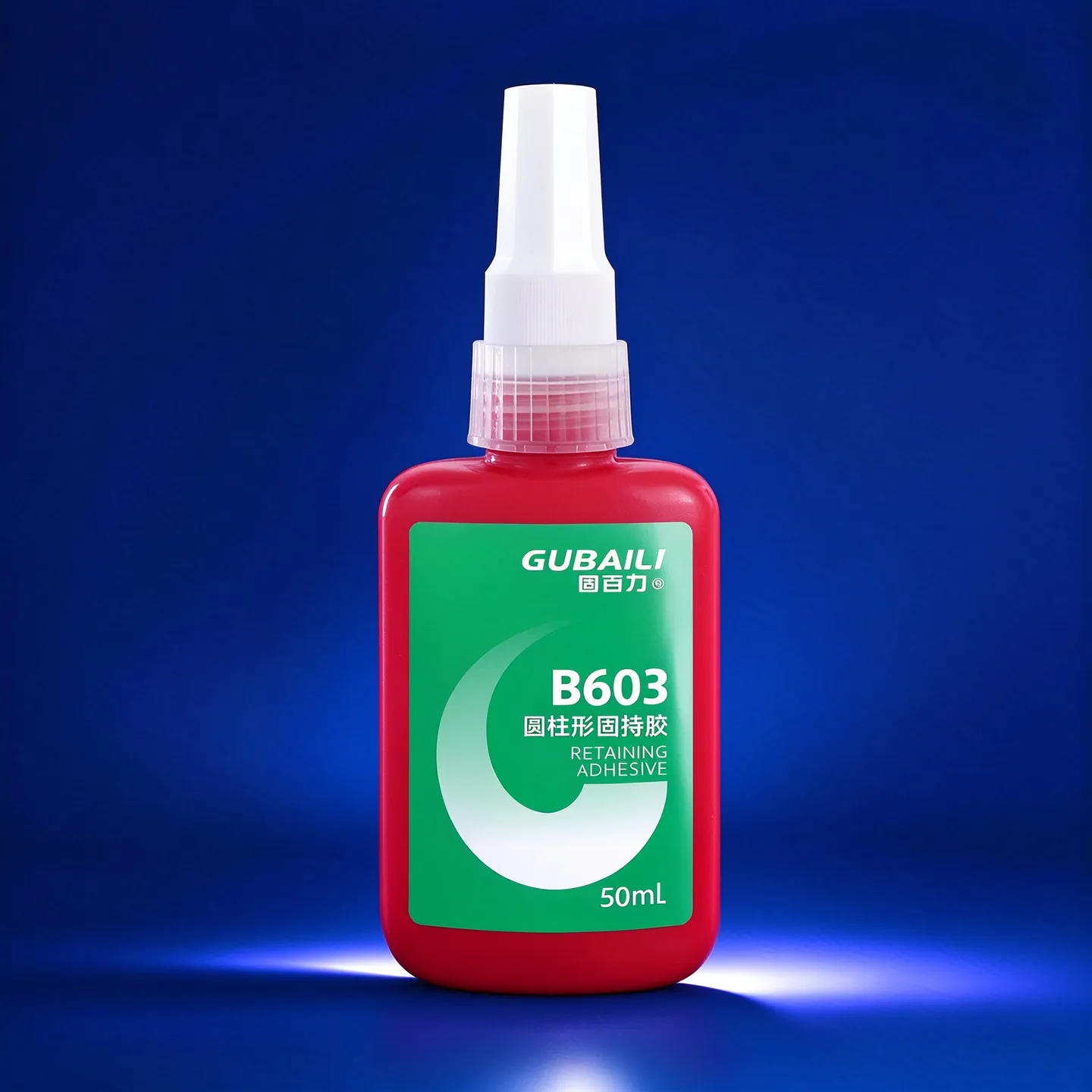
For small clearances and fast press fits, choose low-viscosity B609; for general shaft-to-hub fits, choose B603; for worn or oversized clearances, choose B680 with greater gap-filling capability.
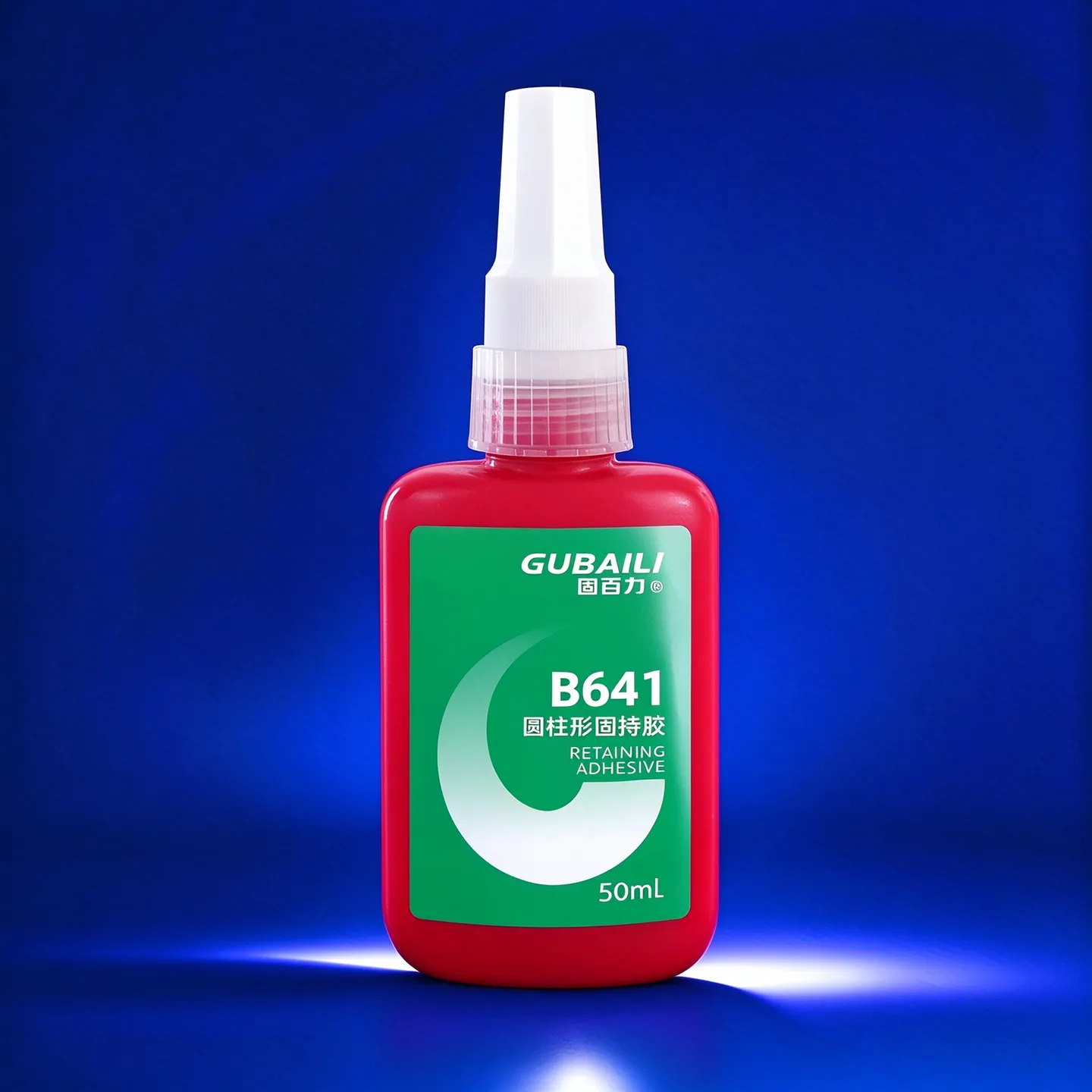
For assemblies requiring periodic maintenance or disassembly, choose B641; for high-temperature or oily environments, prefer B620, B638 and B648 respectively. Measure actual clearance and coaxiality before selection.
It tolerates light oil contamination, making it suitable for shaft-to-hub fits that cannot be fully degreased in maintenance situations.
Degrease as thoroughly as possible; heavy oil contamination significantly reduces final strength.
We customise formulations by substrate, viscosity, cure speed and media resistance, and provide sample testing and technical selection support.
Tell us about your application and our engineers will provide product recommendations, sample dispatch and technical support within 48 hours.