Industrial Adhesives & Sealants Manufacturer

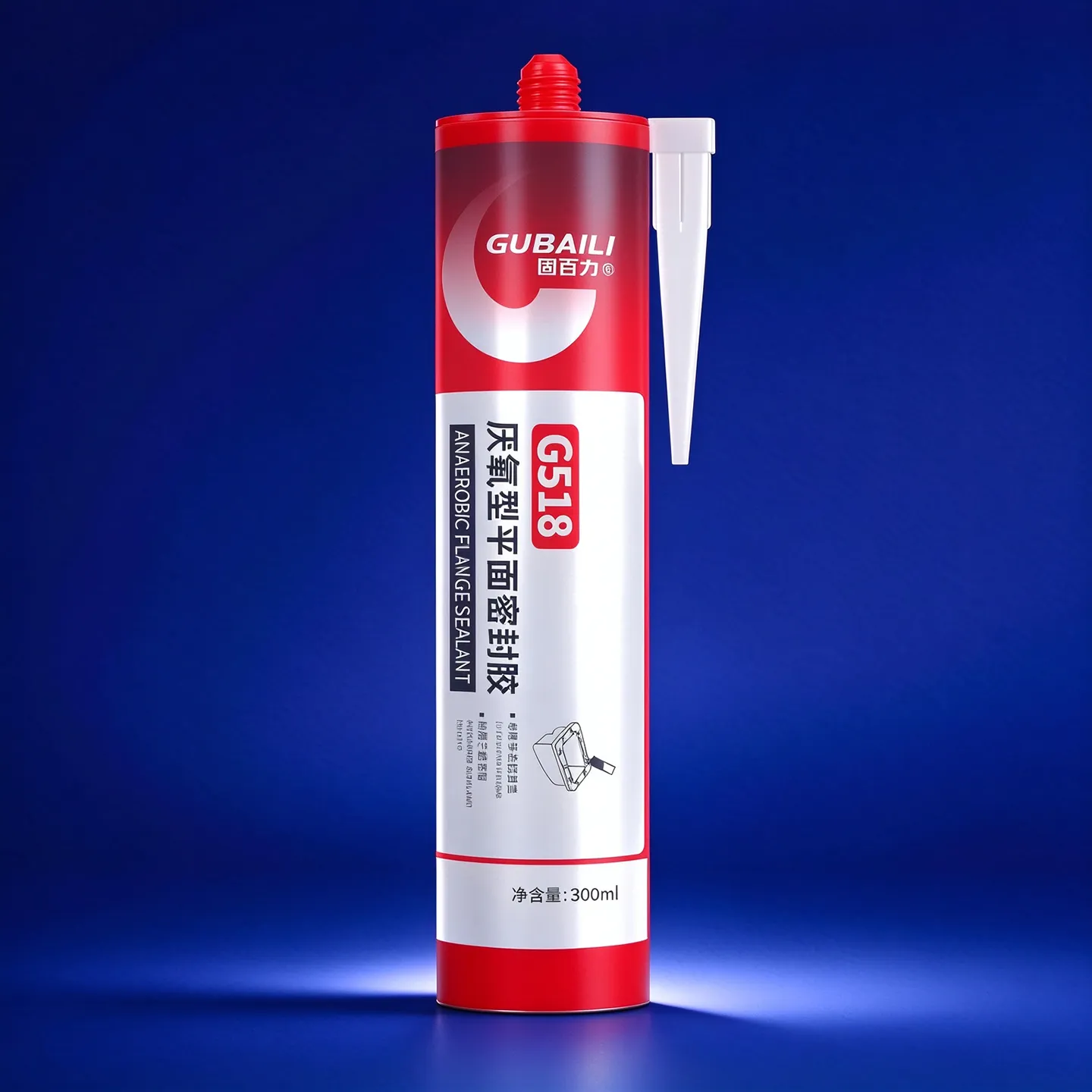
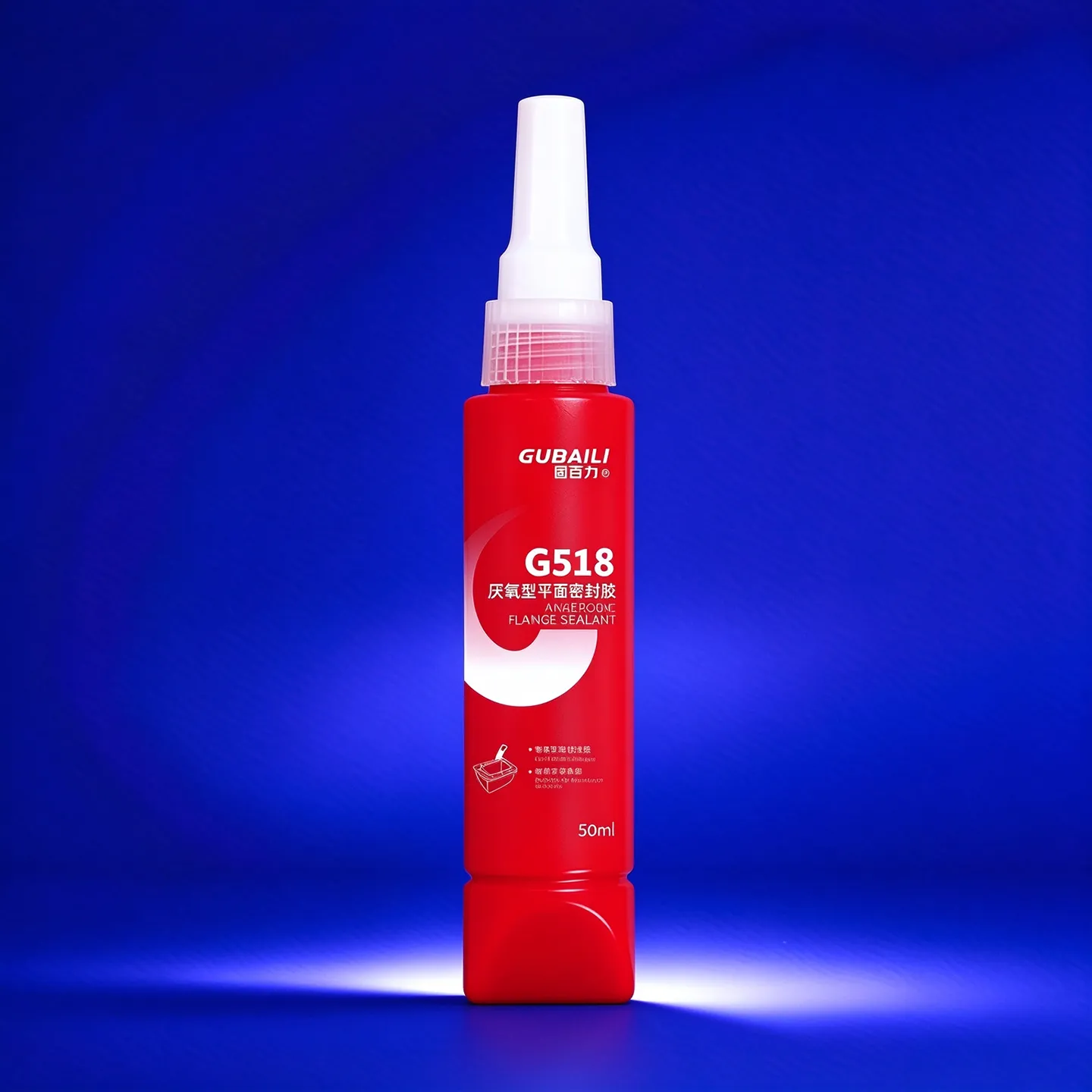
GUBAILI G518 one-component semi-flexible anaerobic flange sealant: primer-free, cures on lightly contaminated surfaces, suitable for steel, cast iron and low-copper aluminum, gap fill 0.25 mm, service temperature -55 to 150°C, fluorescent inspection. 50 ml/300 ml.
Non-sagging at rest, flows under shear for easy application.
Flexible and elastic after cure, accommodating movement and vibration.
Forms a tight seal against gas and liquid leakage.
Universal compatibility with a wide range of substrates.
| Parameter | Specification / Value |
|---|---|
| Product Type | Gasket sealant |
| Chemistry | Methyl methacrylate |
| Cure System | Acrylate, anaerobic curing |
| Components | One-component |
| Form | Gel |
| Color | Red |
| Strength Level | Medium strength |
| Viscosity | 750000 mPa·s (cP) |
| Specific Gravity (@25°C) | 1.1 |
| Maximum Gap Fill | 0.25 mm (0.01 in.) |
| Initial Set Time (Steel) | 25 minutes |
| Service Temperature Range | -55°C ~ 150°C |
| Storage Temperature | 8°C ~ 21°C |
| Features | Thixotropic, fluorescent for inspection, cures on lightly contaminated surfaces, semi-flexible |
| Recommended Substrates | Steel, cast iron, aluminum (including low-copper passive aluminum), passive metals |
| Packaging | 50 ml / 300 ml |
Product Overview
GUBAILI G518 is a one-component semi-flexible anaerobic flange sealant based on a methyl methacrylate anaerobic system. The adhesive is a red gel with built-in thixotropy that resists run-off after application, suitable for manual and automated dispensing. It requires no primer and has a forgiving formula that cures normally even with light oil or dust contamination on the substrate. The cured bond line is flexible enough to move slightly with the flange without cracking, making it especially suitable for aluminum flanges. It cures anaerobically in tightly fitted, air-excluded metal flange gaps and forms a low-pressure seal after assembly and tightening. It fills gaps up to 0.25 mm, compensating for minor machining scratches and flatness deviations. It adheres well to low-carbon steel, cast iron, low-copper aluminum and other passive metals, and fluoresces under UV light for seal-line inspection and production quality control.
Industries
Widely used for sealing rigid flanges on fluid pumps and valves, temperature control components, compressors, gearbox housings and axle covers. Especially suitable for aluminum parts requiring flexibility, and compatible with steel, cast iron and passive aluminum substrates.
Instructions
1. Clean the flange mating surface first, removing old gasket residue, heavy oil and metal chips to improve stability; light contamination is tolerated, but heavy contamination still shortens seal life;
2. Apply a continuous, uniform closed-loop bead along the sealing path, manually or with automated dispensing equipment;
3. Align the parts and tighten the bolts so the flange fits tightly, forming an oxygen-free confined space that triggers curing;
4. Initial set on steel takes about 25 minutes at 25°C, after which the part can be moved; allow full cure before pressure service;
5. Wipe uncured squeeze-out with anhydrous ethanol; cured sealant can be removed by mechanical disassembly.
Precautions
1. Store at 8-21°C in a cool, dark place; high-temperature storage shortens shelf life;
2. Only suitable for sealing rigid metal flanges; porous materials and wide-open gaps cannot exclude oxygen and will not cure properly;
3. Work in a ventilated area and wear protective gloves and goggles to avoid contact with skin and eyes;
4. Do not exceed a seal gap of 0.25 mm; excessive gaps risk poor curing and leakage;
5. Fluorescence is only for visual inspection of the seal line and does not change sealing performance;
6. Industrial anaerobic adhesive—keep away from children and do not ingest.
Degrease, derust and remove old sealant and burrs from the flange face, and keep it dry. Apply a continuous closed bead, keeping clear of the inside of bolt holes and leaving bolt passages open.
After assembly, tighten in stages in a diagonal sequence to the specified torque, avoiding squeezing the sealant out on one side and creating an interruption in the seal.
Anaerobic types suit medium-to-high temperature sealing of rigid structures, while silicone types cover a wider temperature range and remain flexible. For oil contact, select an oil-resistant grade based on the media. Refer to the data sheet for specific temperatures.
To disassemble, separate the flange first, then remove residual sealant with a scraper or dedicated cleaner without scratching the sealing face; leftover sealant will impair the next seal.
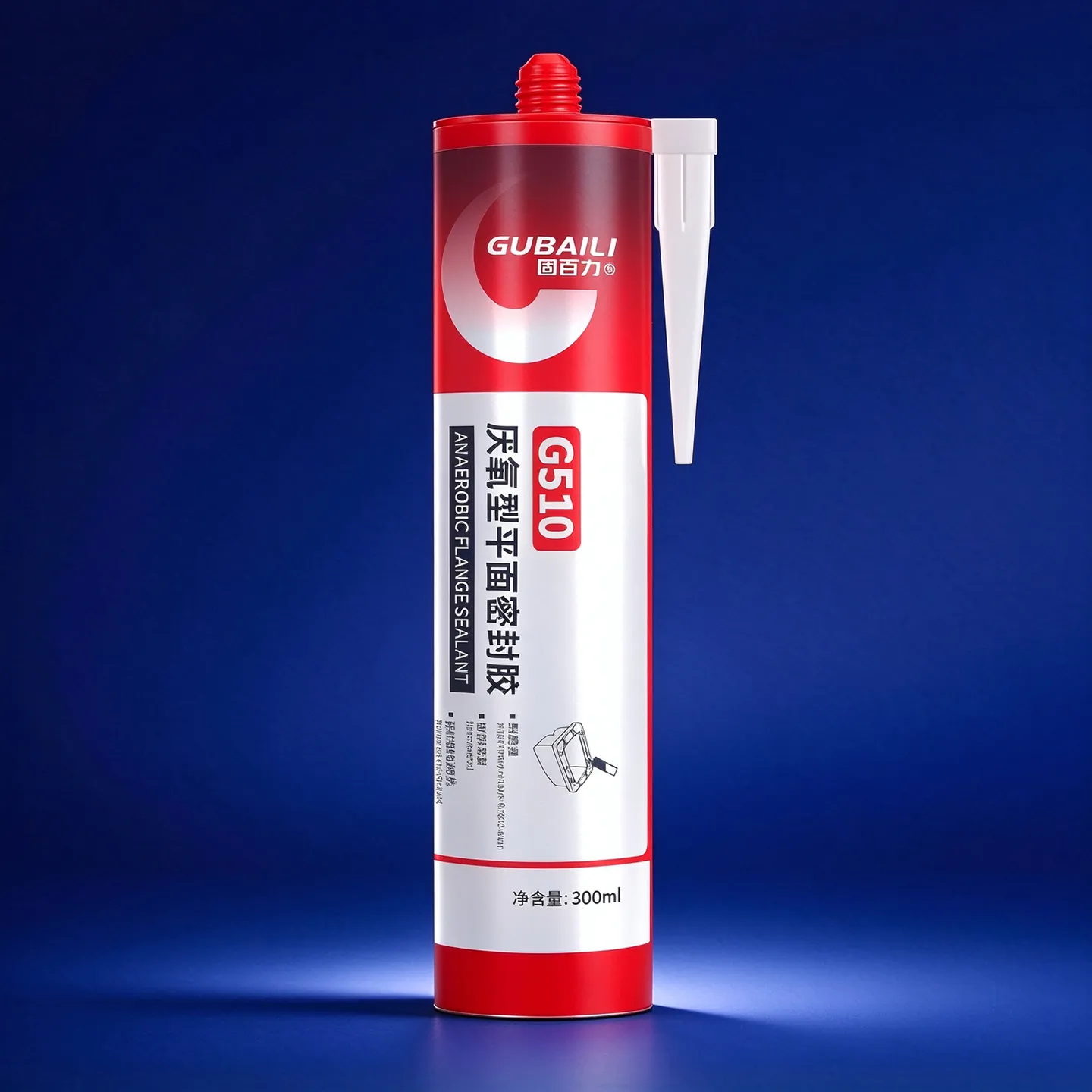
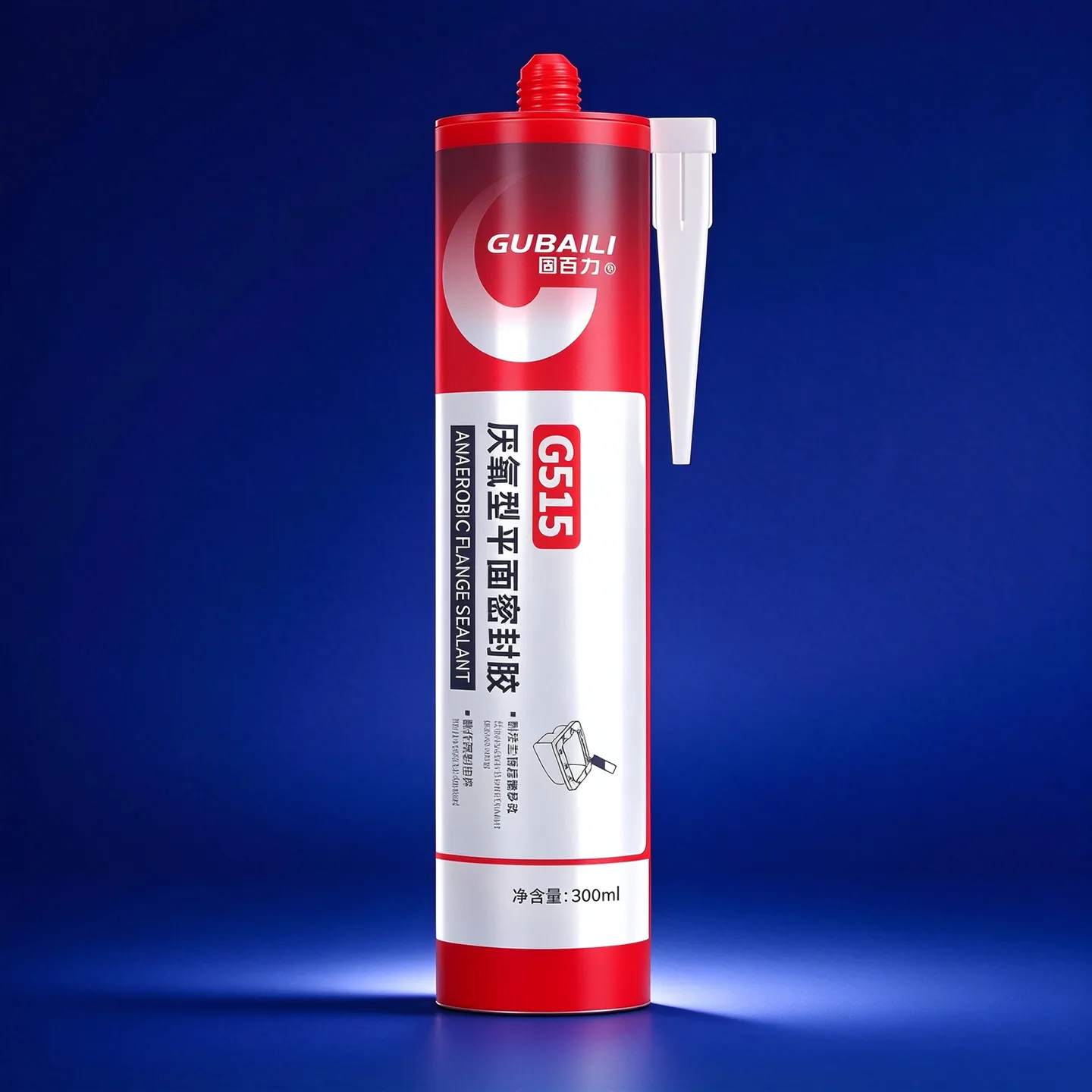
For rigid flanges requiring immediate pressure resistance and high temperature performance, prefer anaerobic types such as G510 and G515; for stamped sheet metal, uneven gaps or slightly distorted flanges, choose semi-flexible G518.
For high temperature or a wider temperature range, choose silicone types G596 and G598; for oil contact, prefer G5699; to replace conventional gaskets, choose G587.
Its semi-flexible formula suits stamped sheet-metal flanges or joints with slight distortion that need vibration absorption.
Increase the amount moderately for larger gaps, but keep the bead continuous.
We customise formulations by substrate, viscosity, cure speed and media resistance, and provide sample testing and technical selection support.
Tell us about your application and our engineers will provide product recommendations, sample dispatch and technical support within 48 hours.