Industrial Adhesives & Sealants Manufacturer

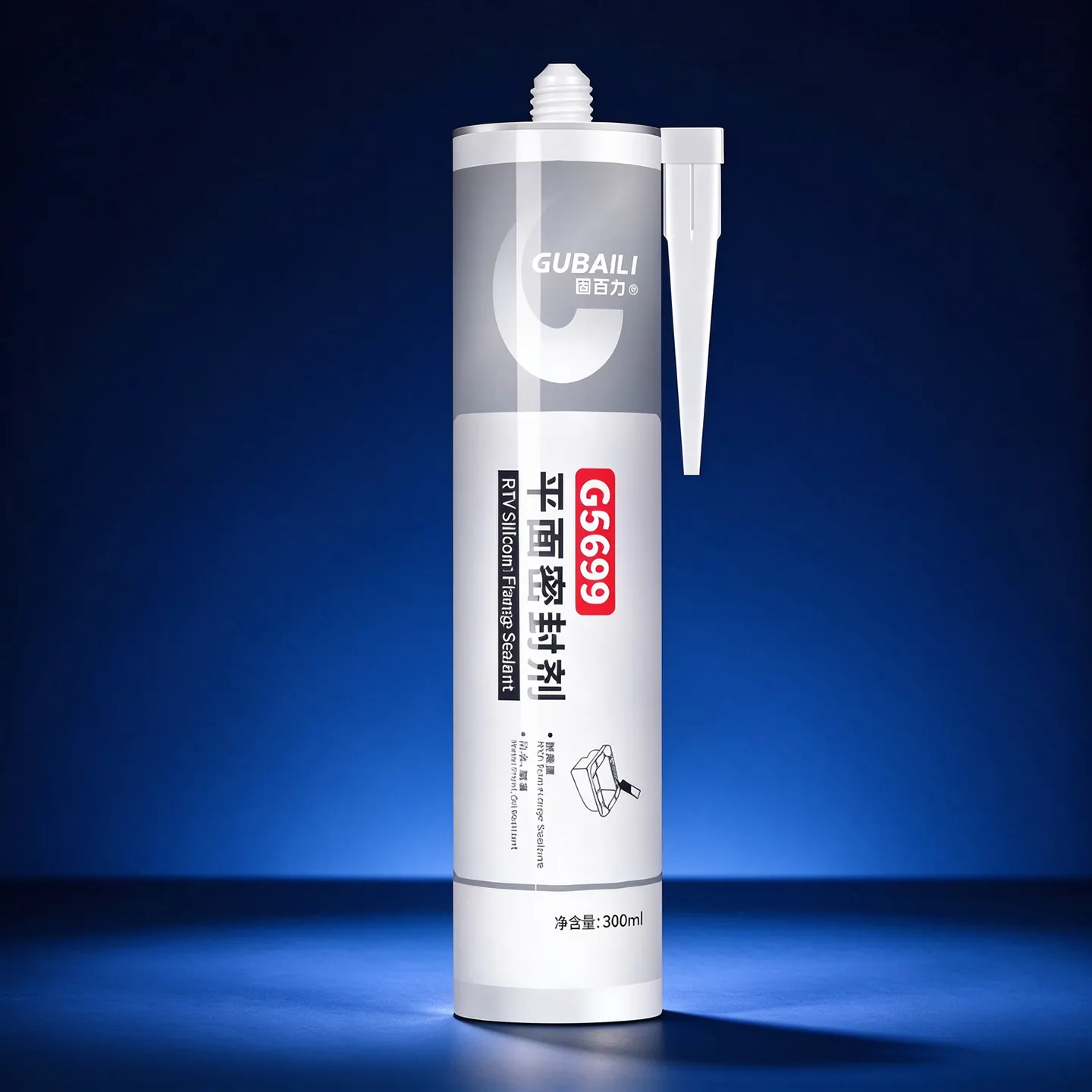
GUBAILI G5699 one-component gray oxime silicone sealant: moisture curing, resistant to engine oil, gear oil and water-glycol, NSF P1 certified, maximum gap fill 6 mm. For automotive, reducers and new-energy motor housing sealing. 300 ml.
Non-sagging at rest, flows under shear for easy application.
Outdoor aging resistance for long-term performance.
Low shrinkage for dimensional stability.
Forms a tight seal against gas and liquid leakage.
| Parameter | Specification / Value |
|---|---|
| Product Type | Flat-face sealant (RTV silicone rubber) |
| Chemistry | Oxime-cure silicone sealant |
| Cure Method | Room-temperature vulcanization (RTV), moisture curing |
| Components | One-component |
| Color | Gray |
| Form | Paste, thixotropic |
| Specific Gravity | 1.45 |
| Extrusion Rate | >= 200 g/min |
| Surface Tack-Free Time | <= 30 minutes (about 10 minutes surface dry) |
| Full Cure Time | 24 hours or more (optimum performance at 7 days) |
| Hardness (Shore A) | 45 ~ 75 |
| Tensile Strength | >= 2.4 MPa |
| Elongation | >= 100% |
| Maximum Gap Fill | 6 mm |
| Service Temperature Range | -54°C ~ 260°C |
| Storage | 8 ~ 28°C, cool and dry |
| Shelf Life | 12 ~ 24 months (subject to package label) |
| Recommended Substrates | Cast iron, steel, aluminum and other metals, metal castings, plastics, polycarbonate (not recommended for concrete) |
| Packaging | 300 ml cartridge |
Product Overview
GUBAILI G5699 is a one-component oxime-cure RTV silicone sealant. The adhesive is a gray thixotropic paste that cures at room temperature with moisture in the air, forming a tough rubber gasket. It is low-odor, low-volatility and non-corrosive, making it friendly to electrical components. It offers outstanding oil resistance, tolerating engine oil, transmission fluid, gear oil and water-glycol media over the long term, along with excellent weather and aging resistance—it does not harden, shrink or crack under thermal cycling. The thixotropic paste resists run-off on vertical surfaces, fills gaps up to 6 mm, and bonds rigid and semi-rigid substrates including metal castings, steel, aluminum, plastics and polycarbonate. It is NSF P1 certified for non-food-contact areas, widely used for flange and housing sealing in automotive, industrial machinery and new-energy equipment, and can replace conventional pre-cut gaskets.
Industries
Automotive and machinery: gearbox housings, engine oil pans, valve covers, timing gear covers, water pump flanges and transmission components. General industrial equipment: pump bodies, compressors, reducer housings and pipe connections. New-energy: motor housings and inverters requiring oil-resistant, high-temperature flat-face sealing. Also rigid flanges, cast housings and stamped metal covers.
Instructions
1. Clean the sealing surfaces, thoroughly removing oil, dust and old adhesive residue; lightly sand metal substrates to improve adhesion;
2. Apply a continuous closed-loop bead along the sealing path; assemble and press the parts within 5 minutes to ensure even filling;
3. Cure speed depends on temperature and humidity—higher humidity cures faster. Surface tack-free in about 10 minutes, tack-free within 30 minutes, initial cure in 24 hours, optimum performance after 7 days; for heavy-duty applications, wait the full 7 days before service;
4. Wipe uncured squeeze-out with a non-polar solvent; cured adhesive can be scraped off with a knife.
Precautions
1. Not suitable for concrete substrates;
2. Moisture-curing silicone—thick bond lines cure slowly inside; for large gaps, apply in stages;
3. Work in a ventilated area and wear protective gloves to avoid contact with skin and eyes;
4. Storage: keep the original package sealed at 8-28°C in a cool, dry place; shelf life 12-24 months, subject to the package label;
5. Industrial adhesive—keep away from children and do not ingest.
Degrease, derust and remove old sealant and burrs from the flange face, and keep it dry. Apply a continuous closed bead, keeping clear of the inside of bolt holes and leaving bolt passages open.
After assembly, tighten in stages in a diagonal sequence to the specified torque, avoiding squeezing the sealant out on one side and creating an interruption in the seal.
Anaerobic types suit medium-to-high temperature sealing of rigid structures, while silicone types cover a wider temperature range and remain flexible. For oil contact, select an oil-resistant grade based on the media. Refer to the data sheet for specific temperatures.
To disassemble, separate the flange first, then remove residual sealant with a scraper or dedicated cleaner without scratching the sealing face; leftover sealant will impair the next seal.
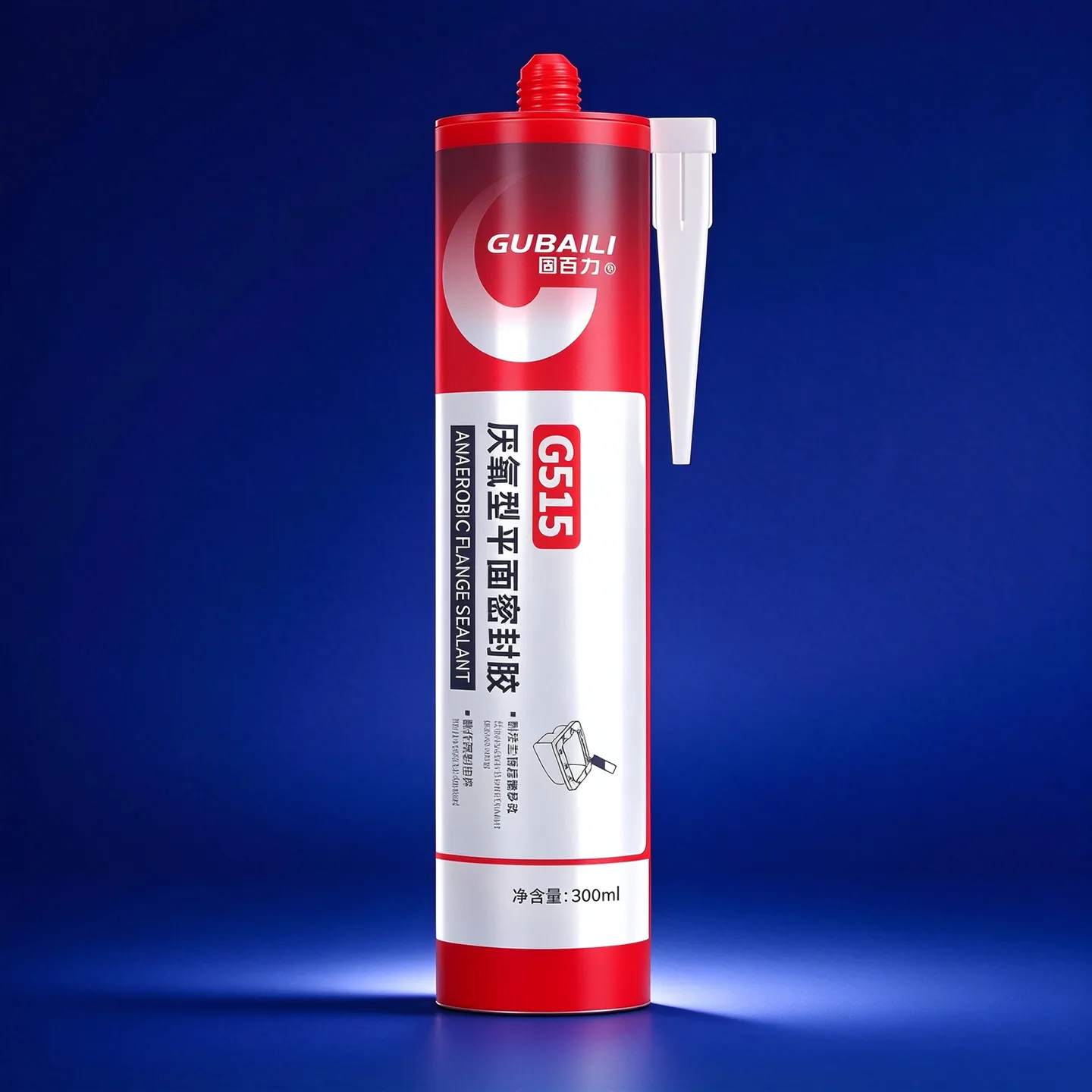
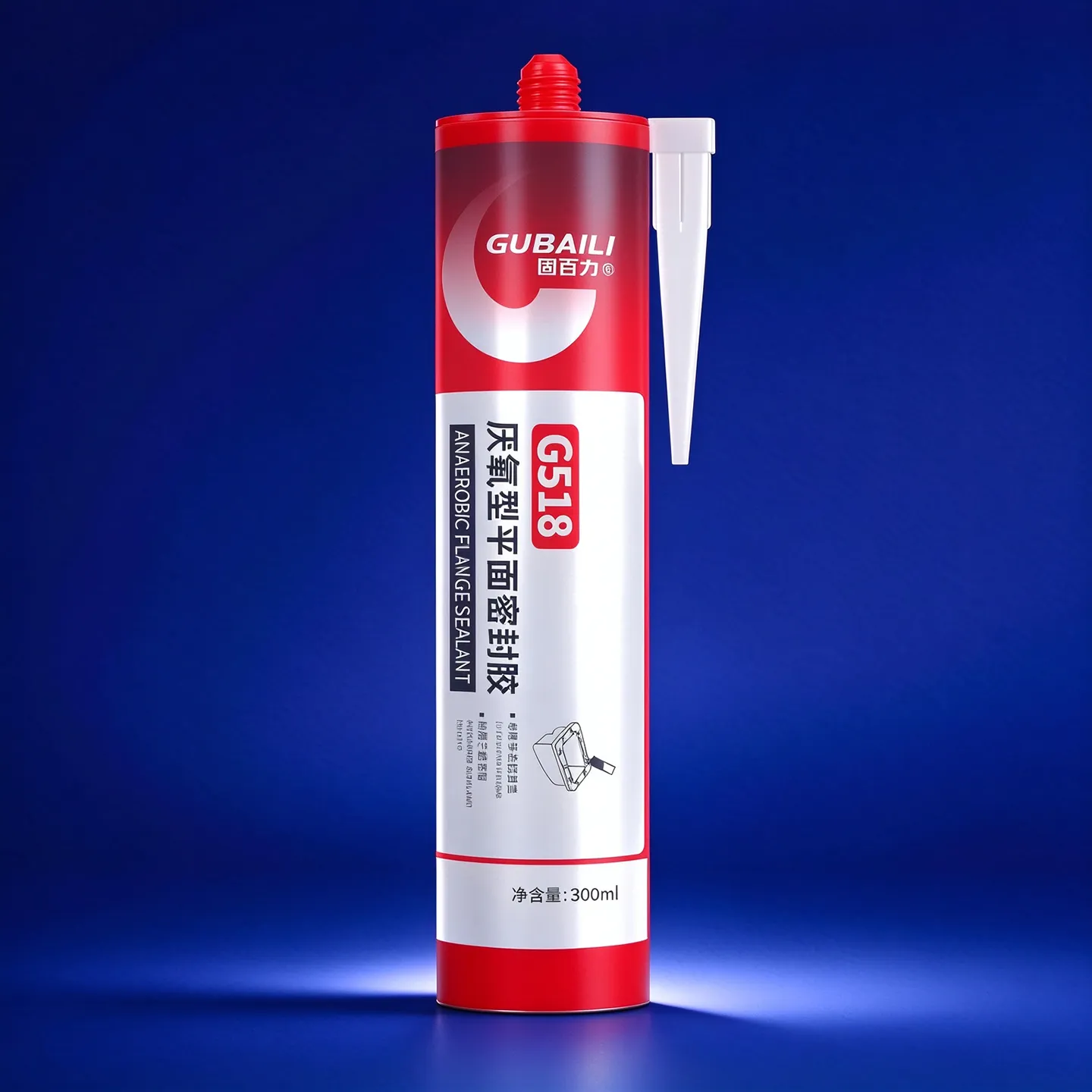
For rigid flanges requiring immediate pressure resistance and high temperature performance, prefer anaerobic types such as G510 and G515; for stamped sheet metal, uneven gaps or slightly distorted flanges, choose semi-flexible G518.
For high temperature or a wider temperature range, choose silicone types G596 and G598; for oil contact, prefer G5699; to replace conventional gaskets, choose G587.
For flat sealing points that are in long-term contact with oil, such as gearboxes and oil pans.
Degrease thoroughly before use and remove all old sealant; otherwise adhesion and seal life are compromised.
We customise formulations by substrate, viscosity, cure speed and media resistance, and provide sample testing and technical selection support.
Tell us about your application and our engineers will provide product recommendations, sample dispatch and technical support within 48 hours.